







According to medical statistics, thyroid diseases rank second in prevalence after diabetes mellitus. The problem is very serious since thyroid hormones regulate almost all metabolic processes in the body.
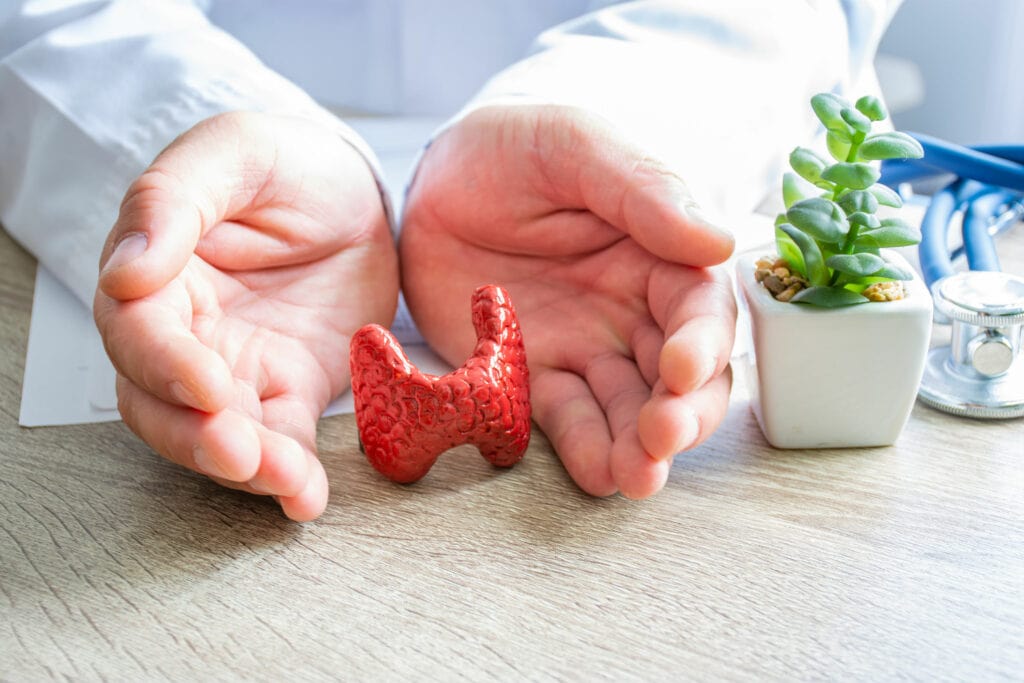
Almost all residents of Ukraine are at risk since the territory of the country is poor in iodine. And this is the main factor that leads to thyroid diseases and general health disorders. A consultation with an endocrinologist at the Universum clinic will help identify the problem in a timely manner.
Causes
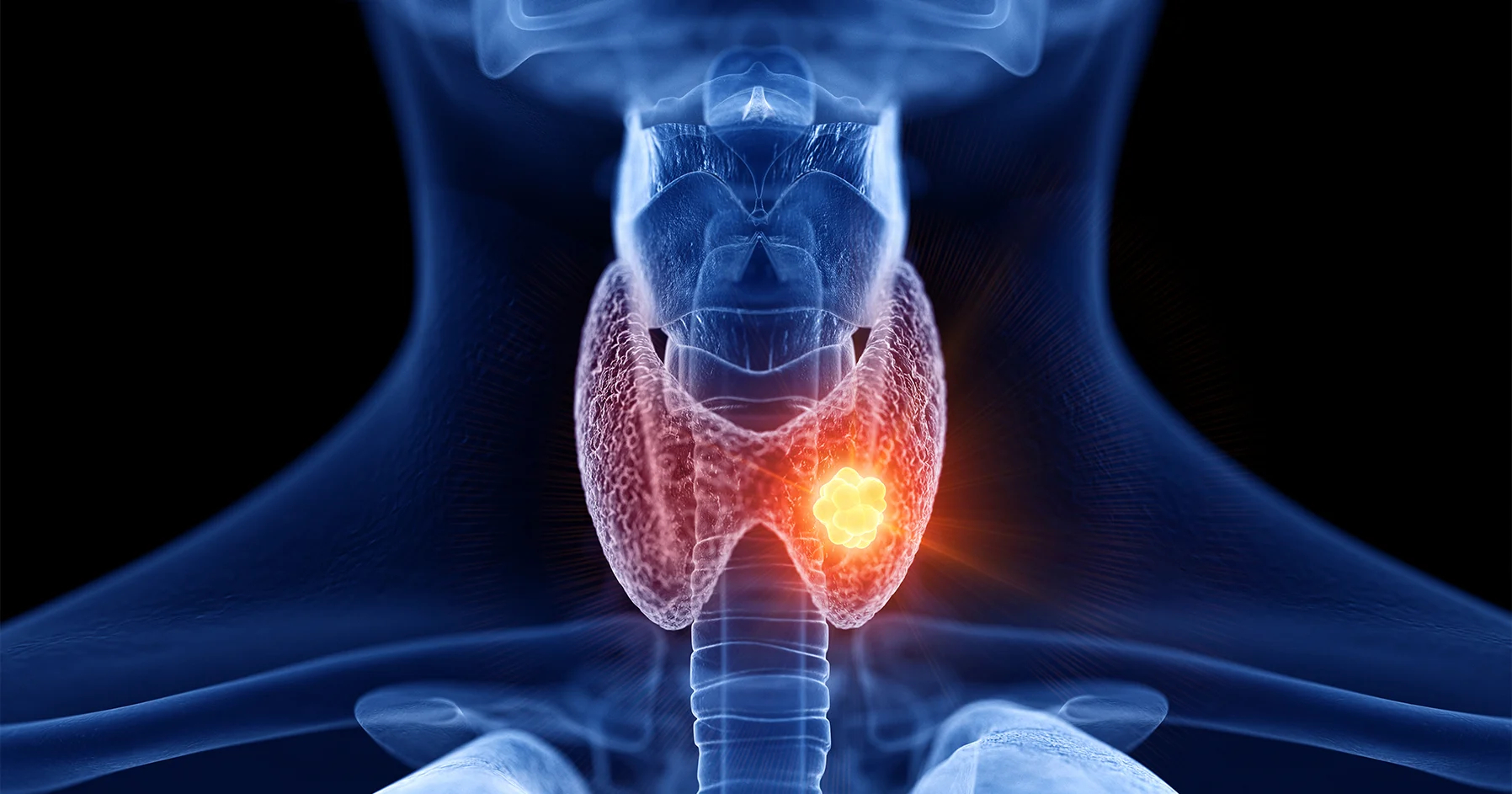
Anatomically, the thyroid consists of many small glands that receive the necessary substances from the blood. And hormones (thyroxine, calcitonin) are returned to the blood in the required quantities. Under the influence of a number of factors, failures occur in this mechanism.
The causes of thyroid diseases are:
-
congenital anomalies;
-
injuries to the anterior neck;
-
insufficient intake or excess of iodine in food, water;
-
deficiency of vitamin A, retinol;
-
autoimmune inflammation;
-
organ tumors;
-
the use of certain medications (for example, amiodarone for arrhythmias);
-
brain pathology when the synthesis of thyroid-stimulating hormone is disrupted (secreted by the pituitary gland, which regulates the activity of the thyroid gland).
Most often, thyroid diseases develop due to iodine deficiency. When this halogen is not enough, the thyroid gland cannot synthesize thyroxine in the required amount. In response to this, the pituitary gland gives the command to increase the synthesis of thyroid hormones. It is impossible to carry out the “order”, and various diseases of the thyroid gland develop.
Symptoms
The thyroid gland produces hormones that regulate energy exchange in cells and tissues. The condition of bone tissue is also under its control.
Disturbances in the functioning of an organ can be twofold: weakening or, on the contrary, strengthening of function. In this regard, the symptoms of thyroid disease are very diverse.
Overfunction (hyperthyroidism)
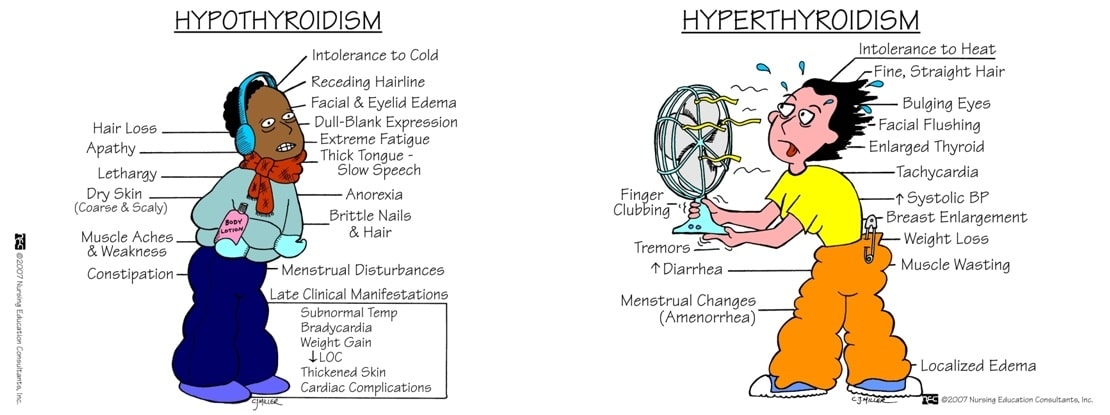
Excessive levels of thyroid hormones speed up metabolism. Symptoms of hyperthyroidism are:
-
a constant feeling of hunger, while people remain thin;
-
constant increase in body temperature above 37.0 degrees;
-
tachycardia, heart rate is 90 or higher per minute;
-
high blood pressure;
-
mood swings, tendency to aggression, mental agitation;
-
frequent loose stools;
-
sweating, red spots on the skin, redness of the palms;
-
pain in the bones and back, deformation of the phalanges of the fingers;
-
hair becomes thin
Against the background of hyperthyroidism, the menstrual cycle may be disrupted in girls and women. The famous bulging eyes appear in advanced stages of hyperthyroidism. It is better to identify the disease before such symptoms appear.
Deficiency (hypothyroidism)
Many people develop the opposite situation. When iodine intake is less than 100 mcg per day, the thyroid gland cannot produce enough hormones. Symptoms of hypothyroidism are:
-
lethargy, apathy, forgetfulness;
-
increase in body weight, to dense mucous edema (myxedema);
-
decrease in body temperature to 36 degrees and below;
-
feeling of chronic fatigue;
-
skin pale, dry and cold;
-
muscle pain, cramps;
-
constipation;
-
heart rate in the region of 60 or less per minute.
-
The hair also becomes thinner, and sections of the eyebrows may fall out.
Diagnostics
Any disease of the thyroid gland leads to serious complications. Thus, hypothyroidism in an infant can lead to irreversible intellectual impairment. At the same time, it is quite possible to protect yourself from such situations.
You should contact the clinic at the slightest suspicion of thyroid dysfunction. Universum clinic specialists will conduct a full examination and help establish the correct diagnosis.
Diagnosis of thyroid diseases includes:
-
medical interview;
-
examination of the patient;
-
blood tests for thyroid-stimulating hormone, triiodothyronine (T3), thyroxine (T4);
-
adrenal function testing;
-
Ultrasound of the anterior surface of the neck, including Doppler ultrasound;
-
ECG, Holter monitoring, echocardiography;;
-
blood glucose level;
-
X-ray examinations, CT scan of the head;
-
MRI of the neck and head.
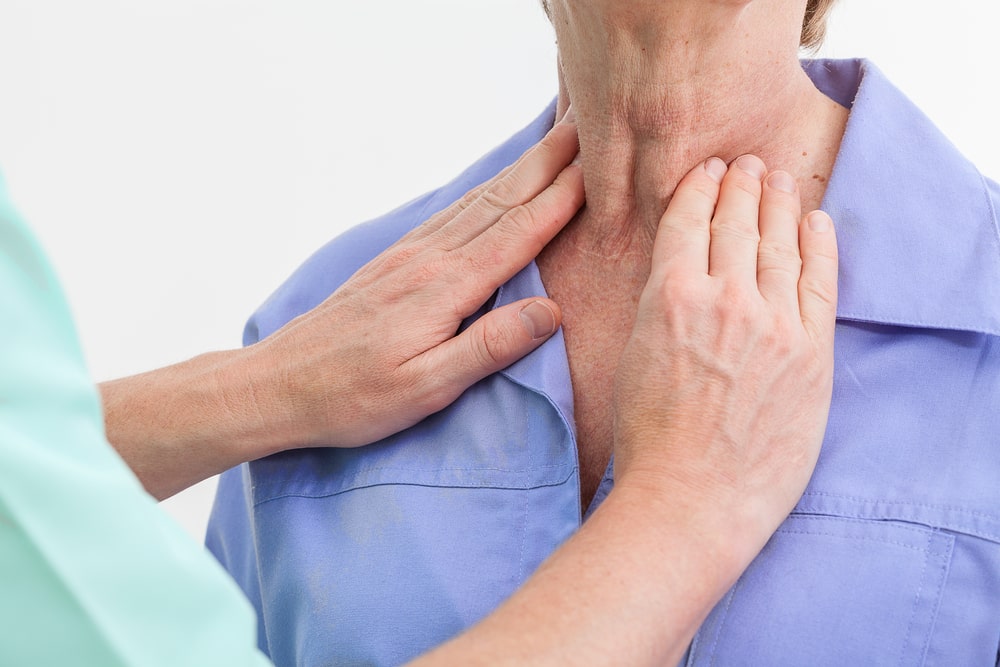
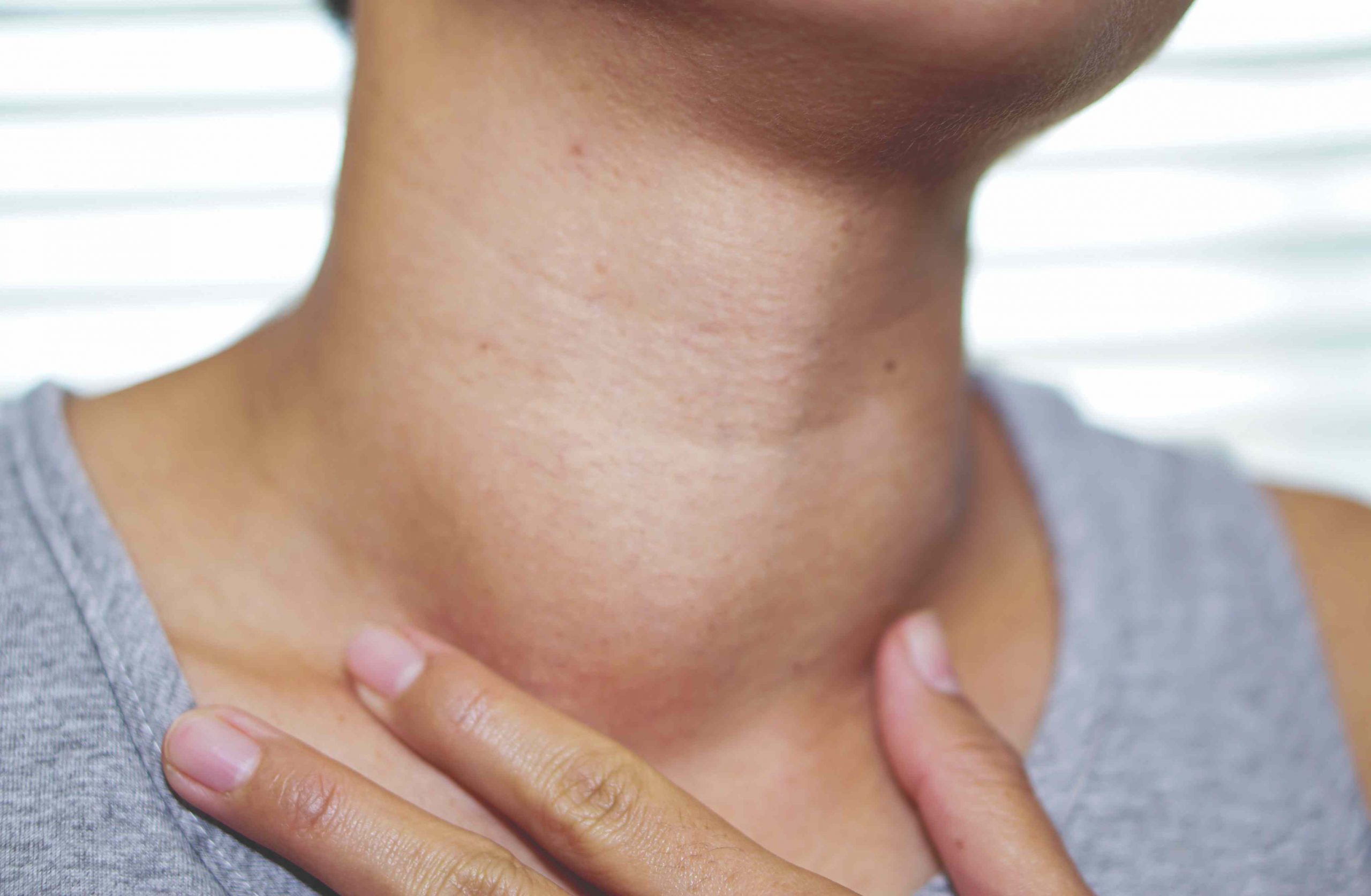
The first conclusions can be drawn based on the results of the inspection. The doctor can detect an enlargement of the thyroid gland (goiter) and determine its degree (there are five in total).
Possible diagnoses
A thorough examination will reveal any abnormalities in the structure and functioning of the thyroid gland. The diagnosis may include:
-
nodular goiter, there are small compactions in the parenchyma of the organ;
-
diffuse goiter - a uniform increase in the size of the gland lobules;
-
thyrotoxicosis - hyperfunction, can occur both against the background of goiter and with normal organ sizes;
-
hypothyroidism – weakening of functional activity, can also be combined with goiter (endemic);
-
tumors, benign or malignant, hormone-active or intact;
Detailed diagnosis is a necessity. This is the only way to choose the optimal treatment approach.
Treatment
It all depends on the diagnosis. In case of nodular hormonally intact goiter, observation can be continued and a re-examination after a few months can be recommended. A single nodule can exist for years and not affect health.
Hyperthyroidism and hypothyroidism require conservative therapy. Tumors must be removed.
Treatment of the thyroid gland is designed to eliminate the cause of hyper or hypofunction of the organ and remove the symptoms of the disease.
For hyperthyroidism the following may be prescribed:
-
anti-inflammatory;
-
cytostatics;
-
beta-blockers;
-
sedatives;
-
specific thyreostatics;
-
multivitamins;
-
drugs to normalize calcium and phosphorus metabolism.
To treat hypothyroidism, supplements with iodine, copper, or ready-made thyroxine preparations are prescribed. The dose is selected for each patient individually.
Surgical treatment
If therapeutic treatment is ineffective or if there is reason to suspect a malignant disease of the thyroid gland, surgery is performed to remove part of the organ or a complete thyroidectomy. Then the person is prescribed thyroxine medications on an ongoing basis, which allow him to maintain health and an acceptable quality of life.
Prevention
Based on the exclusion of risk factors. To prevent thyroid diseases you need:
- give up bad habits, smoking;
- protect the front surface of the neck and head from injury;
- avoid stress;
- ensure healthy and restful sleep;
- undergo an ultrasound scan of the thyroid gland annually, and, if necessary, be tested for thyrotropin, triiodothyronine, and thyroxine.
An affordable way to prevent many cases of thyroid disease is to take iodine supplements.
To choose the optimal drug and dosage, it is recommended to consult an endocrinologist. This is especially important for nursing mothers and newborn babies: iodine supplements will help the child’s brain develop properly.
Rehabilitation and nutrition
For people who have a diseased thyroid gland, treatment by an endocrinologist helps to fully compensate for impaired thyroid function. As a rule, rehabilitation is not required.
Diet can help with hypothyroidism: iodine supplements, seaweed and fresh seafood. A good way is to use iodized salt. However, we must remember that iodine is a volatile halogen. Dissipates quickly from open packaging and hot dishes. Iodized salt will give the best effect in salads and if you add it to dishes immediately before eating.
With thyrotoxicosis, on the contrary: you need to remove from the menu all foods that serve as a source of iodine.
Sources
-
Wiersinga WM, Poppe KG, Effraimidis G. Hyperthyroidism: aetiology, pathogenesis, diagnosis, management, complications, and prognosis. Lancet Diabetes Endocrinol. 2023 Apr;11(4):282-298. doi: 10.1016/S2213-8587(23)00005-0. Epub 2023 Feb 24. PMID: 36848916.
-
Spencer CA. Laboratory Thyroid Tests: A Historical Perspective. Thyroid. 2023 Apr;33(4):407-419. doi: 10.1089/thy.2022.0397. PMID: 37037032.
-
Farooqi S, Raj S, Koyfman A, Long B. High risk and low prevalence diseases: Thyroid storm. Am J Emerg Med. 2023 Mar 27;69:127-135. doi: 10.1016/j.ajem.2023.03.035. Epub ahead of print. PMID: 37104908.
-
Urgatz B, Razvi S. Subclinical hypothyroidism, outcomes and management guidelines: a narrative review and update of recent literature. Curr Med Res Opin. 2023 Mar;39(3):351-365. doi: 10.1080/03007995.2023.2165811. Epub 2023 Jan 18. PMID: 36632720.
-
Bourcier S et al. Critically ill severe hypothyroidism: a retrospective multicenter cohort study. Ann Intensive Care. 2023 Mar 9;13(1):15. doi: 10.1186/s13613-023-01112-1. PMID: 36892784; PMCID: PMC9998819.
F. A. Q.
-
body weight changes quickly (weight loss or weight gain);
-
mood swings (hot temper or apathy);
-
body temperature differs from normal (around 36 or above 37 degrees);
-
hair becomes thinner;
-
you want to eat, but the person does not gain weight, but loses weight;
-
the heart either beats more than 90 or slows down to 60 or less per minute;
-
a noticeable swelling of the front surface of the neck appears.
-
most patients do not experience pain;
-
with osteoporosis, bones and lower back may hurt;
-
Sometimes there is unexplained muscle pain and cramps.
-
there is pain in the heart area, headache caused by increased blood pressure;
-
A goiter can manifest as neck pain and a feeling of a lump in the throat.
-
thyrotoxic crisis - breaks into a sweat, fever appears up to 40 and above, the heart beats 100 times a minute or more, the rhythm breaks down, uncontrollable diarrhea appears, the nervous system becomes more excited, then coma;
-
hypothyroid crisis - apathy, stupor, temperature less than 30 degrees, a sharp decrease in cardiac activity, decreased blood pressure, coma.
-
all types of metabolism in the body are disrupted;
-
the heart expands, dangerous arrhythmias occur;
-
muscles are damaged;
-
the functioning of the nervous system is disrupted;
-
bones are destroyed (osteoporosis);
-
reproductive function in men and women suffers;
-
mental disorders develop;
-
digestion problems (constipation or diarrhea);
-
adverse events occur in almost every organ;
-
without treatment, crisis attacks develop, which are life-threatening.
