






A thyroid biopsy is a diagnostic procedure by which doctors obtain a sample of glandular tissue for microscopic and cytological examination. This technique is approved by the American Thyroid Association and is used in all developed countries to diagnose thyroid (thyroid) diseases.
Universum clinic uses special thin biopsy needles with the ability to aspirate a tissue microfragment. The manipulation takes place on an outpatient basis, thanks to the professionalism of the specialists, obtaining a tissue sample for analysis, as a rule, does not require anesthesia.
How a thyroid biopsy is performed
To perform the procedure with maximum efficiency, a biopsy needle alone is not enough: additional control over the course of the manipulation using ultrasound is required.
The algorithm of fine needle aspiration biopsy (FNAB) of the thyroid gland consists of the following stages
-
preliminary consultation with an endocrinologist;
-
the patient is placed face-up on a couch;
-
an ultrasound of the thyroid gland, including Doppler ultrasound, is organized to detect nodules and mark their localization and depth;
-
marks are applied to the skin to insert a biopsy needle;
-
the skin over the needle insertion site is disinfected;
-
an ultrasound sensor is placed on the thyroid gland to monitor the needle trajectory;
-
a biopsy needle is inserted in a pre-specified place and under ultrasound control is inserted into the suspicious node;
-
then a small fragment of tissue is sucked (aspirated) with a syringe connected to the needle cavity, and the needle is removed;
-
the biopsy material is sent for histological and cytological examination, and the patient can go home.
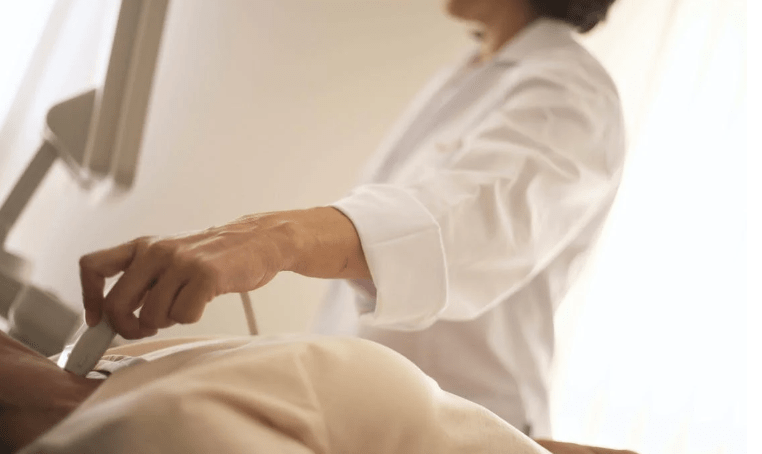
It is not recommended to perform manipulation without ultrasound control during the procedure: there is a high risk of making a mistake, passing by the focus, taking cells, and getting incorrect diagnostic data.
Universum clinic specialists perform a professional thyroid biopsy in Kyiv, Chernivtsi, Uzhhorod, Khmelnytskyi, Lviv - in any branch of the clinic. As a rule, there is no need for anesthesia. However, if necessary, local infiltration anesthesia with a safe anesthetic is administered.
Who prescribes thyroid biopsy?
The main purpose of a thyroid biopsy is to assess the risk of malignancy in the tissues of the organ. The procedure helps to detect a malignant process at the beginning of its development, and also helps to avoid unnecessary surgery if the nodule is benign. With the help of FNAB, diagnoses of diffuse organ pathology are confirmed or refuted.
The indications for fine needle aspiration biopsy of the thyroid gland are as follows
diagnosis of diffuse thyroid diseases (Hashimoto's autoimmune thyroiditis, Graves' disease)
-
neoplasms with a diameter of 10 mm or more;
-
neoplasms with a diameter of less than 10 mm, if ultrasound detected signs of possible malignancy of the focus;
-
increase in the size of the node over several weeks or months;
-
appearance of new foci in the thyroid tissue;
-
lack of effect in case of conservative treatment of nodular goiter
The patient's wishes are also taken into account. If a person has a family history of thyroid cancer, a biopsy of a thyroid nodule for preventive purposes may be quite justified.
Preparation for the procedure
Due to the absence of the need for general anesthesia, the procedure does not require any special preparation. At the preparation stage, a survey is conducted to determine the duration of the process and its dynamics. The patient is questioned about drug allergies (if anesthesia is planned).
General recommendations are as follows:
-
inform the doctor in advance if you are taking anticoagulants (aspirin, clopidogrel, warfarin, and other medications);
-
have breakfast in the morning before the procedure;
-
arrive at the clinic by the agreed time.
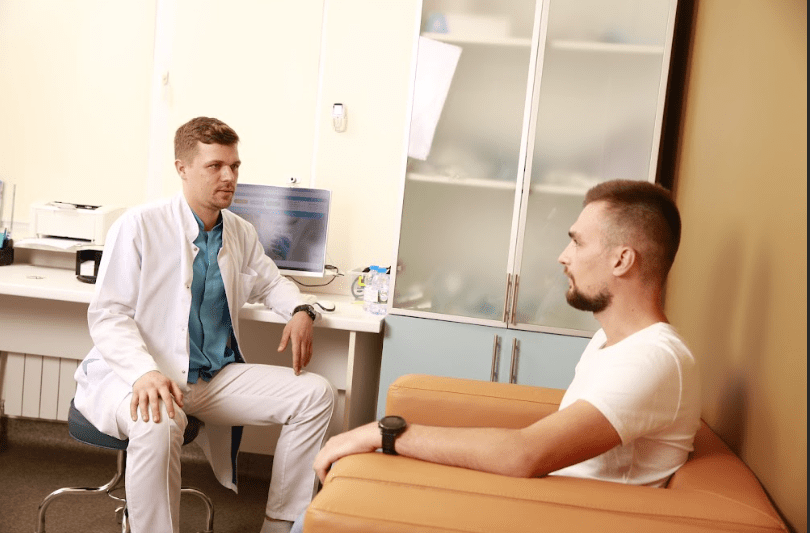
All medical materials, including sterile gel for ultrasound monitoring of the procedure, are provided by Universum clinic.
After the procedure
Thyroid biopsy has been performed since the 30s of the XX century and has been studied to perfection. Each step is perfected and performed under ultrasound control, so the manipulation remains safe for the patient.
After the procedure, you may experience pain at the injection site (the probability is higher if several nodes are punctured). The pain syndrome is relieved with a common painkiller.
It can also be useful to apply a cold compress to the neck to reduce or relieve slight swelling.
The risk of bleeding is minimal, but hematomas may occur because the thyroid tissue is very well supplied with blood. As a rule, such situations are detected during a biopsy and immediately eliminated by the clinic's specialists.
The results of the cytological examination are prepared within a few days, and the Universum clinic staff informs the patient in a way convenient for the patient. And provides a decoding of the data obtained.
Sources
- Tafti D, Schultz D. Thyroid Nodule Biopsy. [Updated 2022 Sep 7]. In: StatPearls [Internet]. Treasure Island (FL): StatPearls Publishing; 2023 Jan-. Available from: https://www.ncbi.nlm.nih.gov/books/NBK557883/
- Antonia TD, Maria LI, Ancuta-Augustina GG. Preoperative evaluation of thyroid nodules - Diagnosis and management strategies. Pathol Res Pract. 2023 Jun;246:154516. doi: 10.1016/j.prp.2023.154516. Epub 2023 May 12. PMID: 37196471.
- Wang L, Wang Y, Lu W, Xu D, Yao J, Wang L, Xu L. Differential regional importance mapping for thyroid nodule malignancy prediction with potential to improve needle aspiration biopsy sampling reliability. Front Oncol. 2023 Apr 28;13:1136922. doi: 10.3389/fonc.2023.1136922. PMID: 37188203; PMCID: PMC10175814.
F. A. Q.
-
Modern equipment, specialist training and ultrasound monitoring make this procedure a safe and effective manipulation;
-
Possible complications described in the literature include infections of the puncture site and bleeding.a
-
The procedure is outpatient;
-
the patient lies down on a couch on his back, tilts his head back;
-
an ultrasound sensor is installed in the thyroid gland, which provides real-time information about the location, size and depth of the nodule;
-
a thin needle is inserted, brought to the focus and immersed in it;
-
in the case of the aspiration technique, a syringe is connected to the needle, and the doctor, pulling up the piston, sucks a tissue fragment into its channel;
-
in the traditional technique without aspiration, the needle is passed 2-3 times through the node and back, collecting cells in the canal;
-
in case of diagnosis of diffuse pathology, a biopsy is performed with different needles from several parts of the thyroid gland;
-
after the procedure, the doctor checks for bleeding, and the patient goes home.
-
the procedure with ultrasound control takes 10-20 minutes;
-
in case of biopsy from several sites, the duration may slightly increase;
-
test results are usually ready in 1-3 days.
-
Conceal from the doctor the use of anticoagulants and possible allergies to any medications;
-
Do not drink alcohol 24-48 hours before the procedure;
-
come hungry.
