







Epilepsy is a neurological disorder in which the brain starts sending chaotic discharges to the body at certain moments in time. This manifests as uncontrolled seizures (commonly known as epileptic attacks), loss of consciousness, and disturbances in mental functioning. A person can lose control over their body at any moment and may harm themselves. Over time, the individual's personality and the character of the patient change, and their cognitive abilities deteriorate.
Neurologists at LuxMedic Clinic use the recommendations of modern evidence-based medicine, adapting them to each specific patient. This approach often leads to the complete elimination of seizures. A preliminary consultation with a specialist can be obtained online, without the need for an in-person clinic visit.
Causes
The neurons in the brain continuously maintain a balanced electrical background. This allows us to control motor activity, respond to stimuli, and function properly. However, sometimes, in this harmonious symphony, there is discord and discharges from certain neurons spread too intensely, activating unnecessary cells. One of the manifestations of such electrical activity is recurrent epileptic seizures, which occur with varying frequencies.
Epilepsy is a condition that affects approximately one in every 150 people worldwide, and its causes are diverse:
-
Genetic Predisposition (anomalies in cellular membranes can lead to the brain being in a predisposition to seizures, often due to genetic factors)
-
Head Injuries: Traumatic head injuries, concussions, and intracranial hematomas and their consequences can trigger epilepsy.
-
Common Harmful Habits: Excessive alcohol and nicotine abuse are common factors contributing to epilepsy.
-
Cerebral Microcirculation Disorders: Conditions like strokes and neurodegenerative diseases can lead to epilepsy.
-
Toxic Substances: Poisoning from toxic substances and alcohol can be a cause.
-
Brain Tumors: Both benign and malignant brain tumors can result in epilepsy.
-
Neuroinfections: Individuals with immunodeficiency are at higher risk of developing epilepsy as a result of neuroinfections.
-
Metabolic Disorders: Disturbances in mineral metabolism in the body can also be a contributing factor.
These factors can trigger seizures at any age since epilepsy affects not only adults but individuals of all ages.
Causes of Childhood Epilepsy
Epilepsy in children is a phenomenon that, unfortunately, is not uncommon. This is associated with the immaturity of communication between neurons. If some provocative factor is added to this background, an abnormal discharge in the neurons can occur in a child.

In children, epilepsy can arise from the following causes:
-
Congenital Abnormalities
-
Gestational Issues
-
Birth Trauma
-
Fever and High Body Temperature: Febrile seizures, which occur during episodes of high fever, can lead to epilepsy in children. However, not all febrile seizures result in epilepsy.
-
Hyperexcitability
Unusual movements such as hyperkinesias and tics in children are considered distinctive seizure manifestations, which include frequent inhaling, facial muscle twitches, and limb movements. Such symptoms are a reason to consult a neurologist for an evaluation.
Symptoms
In addition to seizures, individuals with epilepsy often (but not always) experience peculiar sensations known as an aura. Auras can involve visual flashes, imaginary smells, or headaches. Within a few minutes or seconds of the aura, a seizure may occur. The nature of the seizure depends on the type of epilepsy.
Simplified, epilepsy is classified into two categories:
-
Generalized Epilepsy: In this type, abnormal electrical activity affects a large volume of neural tissue.
-
Partial (or Focal) Epilepsy: This type involves chaotic impulses disrupting the function of a small cluster of neurons.
Depending on the type of epilepsy, the disease's manifestations will vary.
Symptoms of Generalized Epilepsy
When a large number of neurons are involved, epileptic seizures can occur. There are several types of these seizures:
-
Tonic-Clonic Seizures: The person falls, loses consciousness, and experiences uncontrolled limb movements.
-
Clonic Seizures: Muscles in the limbs contract, but there are no convulsions. Consciousness is also lost.
-
Atonic Seizures: These involve brief paralysis, a loss of control over specific muscle groups, but the individual remains conscious.
-
Absence Seizures: These are characterized by mild motor disturbances, potentially involving increased breathing frequency, with the person retaining consciousness.
-
Tonic Seizures: Uncontrolled contractions of the muscles in one limb, arm, or leg occur.
-
Myoclonic Seizures: Manifested by sudden jerking movements of the arms, legs, or head.
The most severe form of epilepsy is considered to be the type that results in a loss of consciousness.

The person may bite their tongue, and frothing at the mouth is common during a seizure. Typically, after a seizure with loss of consciousness, the individual has no memory of the episode.
Symptoms of Partial (Focal) Epilepsy
In this scenario, abnormal electrical activity is restricted to a specific area of the brain, and the symptoms can vary depending on the affected region. Some common symptoms of partial epilepsy include:
-
Hallucinations and Illusions
-
Behavioral Disturbances: Unusual or erratic behaviors can occur during a seizure.
-
Impairment of Social Function
-
Involuntary Movements of Fingers and Facial Muscles
-
Sensory Disturbances: These can include buzzing in the ears, skin tingling, or smelling non-existent odors.
-
Autonomic-Vestibular Symptoms: Seizures can lead to feelings of hunger or thirst, changes in blood pressure, or other autonomic symptoms.
Partial (focal) epilepsy can be challenging to notice. Sometimes, during a seizure, a person may seem to "zone out" for a few seconds. They may involuntarily smack their lips, wander aimlessly, or occasionally stutter. When they return to awareness, they often have no recollection of those seconds.
Dangerous Symptoms of Epilepsy
While many people with epilepsy experience isolated, transient seizures, there are situations that require immediate assistance. One such condition is known as "status epilepticus," characterized by a seizure lasting longer than 2.5-3 minutes, where the person is unconscious, and there may be compromised breathing.
Dangerous situations also arise when multiple seizures occur consecutively with little or no recovery time in between. In such cases, immediate qualified assistance is necessary.
Typically, these dangerous states tend to occur in individuals who have not undergone a comprehensive evaluation and are not receiving treatment. It is important for individuals with epilepsy to work closely with healthcare professionals to manage their condition and reduce the risk of such critical situations.
Diagnosis
Generalized epilepsy in adults and children with "major" seizures is typically noticeable and warrants consultation with a neurologist. However, the partial form of epilepsy is sometimes overlooked because changes in the patient's condition are less noticeable. Both forms of the disease have a negative impact on the patient's mental well-being.
Even a single seizure is a reason to seek medical attention. Specialists at LuxMedic Clinic conduct comprehensive epilepsy diagnostics for patients. The diagnostic process may include:
-
Thorough medical history taken from the patient and their close family members.
-
Identifying potential seizure triggers.
-
EEG (Electroencephalography) - recording the brain's electrical potentials to identify the source of pathological discharges in the brain.
-
ECG (Electrocardiography) - a multi-channel electrocardiogram.
-
Blood tests for electrolytes, glucose, and toxins.
-
Ultrasound of the central nervous system to assess blood supply to its regions.
-
CT and MRI of the head, including contrast imaging.
-
Occasionally, a cerebrospinal fluid analysis for infections may be performed.
This comprehensive approach helps in diagnosing and understanding the nature of epilepsy in the patient, allowing for appropriate treatment and management.
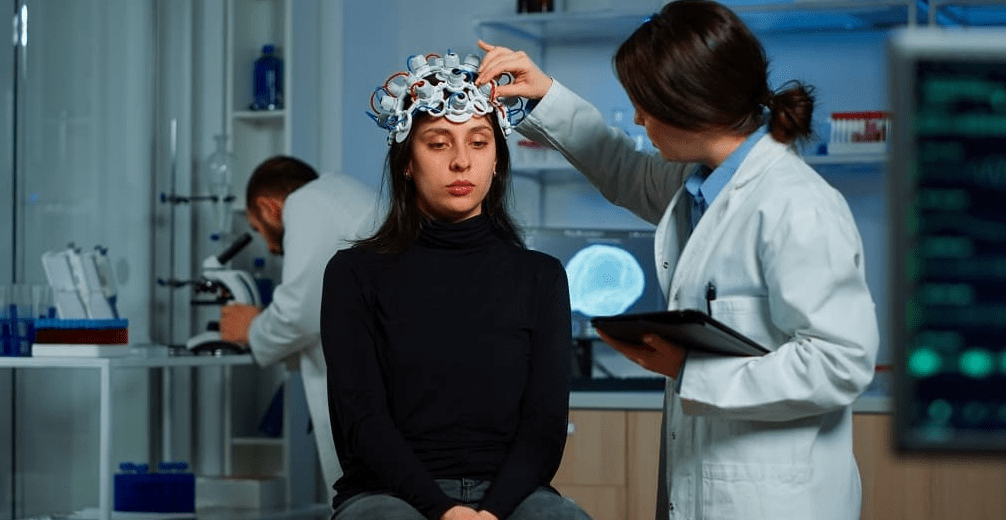
The results of these examinations enable doctors to identify the underlying causes of seizures in a specific patient. This, in turn, helps tailor a pathogenic, individualized, and effective treatment plan for the patient, regardless of their age.
The diagnostic phase is crucial because individuals may experience seizures that are not related to epilepsy (for example, seizure-like episodes in individuals with alcohol use disorder). In such cases, the treatment strategy is determined on an individual basis, taking into account the diagnosis that led to the seizure syndrome.
Treatment
Modern protocols prioritize the use of medication for the treatment of epilepsy. There are many options and medications available for conservative therapy. Various groups of medications with different active substances are used to treat the disease, including:
-
Antiepileptic Drugs (Anticonvulsants)
-
Sedatives
-
Phenobarbiturates
-
Tranquilizers
-
Succinimide Derivatives
-
Gamma-Aminobutyric Acid (GABA) Analogs
-
Amino Acid Derivatives
The choice of medication and treatment plan is individualized and depends on the type of epilepsy, the patient's age, the severity of the condition, and other factors. It's important for patients to work closely with their healthcare providers to find the most effective treatment strategy for their specific situation.
In the case of timely intervention and help, it is often possible to completely eliminate seizures in children and eventually discontinue medication. In adults, the condition often becomes chronic, requiring medication for many years.
Surgical intervention is considered a last resort. Neurosurgeons may either remove the affected focus that is the source of abnormal electrical activity or implant a vagus nerve stimulator device.
The approach is individualized for each case. Specialists at the clinic aim to use monotherapy whenever possible: selecting medications that effectively prevent the recurrence of seizures.
Prevention
Many risk factors for the development of epilepsy can be prevented.
Here are some preventive measures and strategies:
-
Healthy Prenatal Care: Providing pregnant women with regular and comprehensive prenatal care, which includes monitoring the health of both the mother and the developing fetus, can help ensure a healthy pregnancy.
-
Avoiding Harmful Environmental Exposures: Minimizing exposure to toxins, pollutants, and avoiding alcohol and tobacco
-
Injury Prevention
-
Regular Check-ups
It is also important to protect the person from the consequences of a seizure. If a person has epilepsy, providing first aid involves ensuring that conditions for injury are minimized. During a seizure, you can:
-
Protect the Head: Place something soft under the person's head to cushion against any impact with a hard surface.
-
Positioning: Gently turn the person onto their side to prevent choking on saliva or vomit, and hold them in that position.
-
Remove Hazards: Clear the area of any sharp or dangerous objects that the person could potentially come into contact with during the seizure.
-
Stay Calm: Try to stay calm and reassure others around you.
-
Call for Medical Help: If the seizure lasts longer than five minutes, if the person has multiple seizures in a row, or if the person is injured during the seizure, seek immediate medical assistance.
The best prevention of seizure episodes and their consequences is seeking advice from an experienced neurologist who can provide guidance on proper management and treatment.
Rehabilitation and Nutrition
Properly selected medication therapy often allows epilepsy to be completely eliminated, and after some time, it may be possible to discontinue medication. Unfortunately, in some cases, medications have to be used for a lifetime.
As for the diet, it's a complex issue. There is information suggesting that a ketogenic diet, which restricts carbohydrates and emphasizes fats, may have a positive effect for individuals with epilepsy. However, this dietary approach lacks strong scientific evidence, so it is not recommended to independently practice a ketogenic diet for epilepsy. It's better to discuss this with a specialist: a neurologist from LuxMedic Clinic can help the patient create an individual rehabilitation and dietary plan.
Sources
- Наказ МОЗ України від 17.04.2014 № 276 “Про затвердження та впровадження медико-технологічних документів зі стандартизації медичної допомоги при епілепсіях”.
- Epilepsies: diagnosis and management. London: National Institute for Health and Care Excellence (NICE); 2021 May 12. (NICE Clinical Guidelines, No. 137.) Available from: https://www.ncbi.nlm.nih.gov/books/NBK553536/
- Czuczwar SJ, editor. Epilepsy [Internet]. Brisbane (AU): Exon Publications; 2022 Apr 2. Available from: https://www.ncbi.nlm.nih.gov/books/NBK580617/ doi: 10.36255/exon-publications-epilepsy
- InformedHealth.org [Internet]. Cologne, Germany: Institute for Quality and Efficiency in Health Care (IQWiG); 2006-. Epilepsy: Overview. 2016 Jan 13 [Updated 2019 Dec 5]. Available from: https://www.ncbi.nlm.nih.gov/books/NBK343313/
- Xia Y, Lai W, Li S, Wen Z, Chen L. Differentiation of Epilepsy and Psychogenic Nonepileptic Events Based on Body Fluid Characteristics. Epilepsia Open. 2023 Jun 17. doi: 10.1002/epi4.12775. Epub ahead of print. PMID: 37329211.
- Neri S, Mastroianni G, Gardella E, Aguglia U, Rubboli G. Epilepsy in neurodegenerative diseases. Epileptic Disord. 2022 Apr 1;24(2):249-273. doi: 10.1684/epd.2021.1406. PMID: 35596580.
F. A. Q.
-
a disorder of the brain's electrical activity characterized by a tendency to experience recurrent seizures, along with neurobiological, cognitive, and social disturbances.
-
seizures are repetitive events.
-
Problems during prenatal development can contribute to epilepsy.
-
Head Injuries
-
Toxic Substances
-
Photosensitivity
-
Fever
-
Sleep Deprivation
-
Hypoxia
-
Stress
-
For a generalized seizure:
-
A person loses consciousness, falls, and their limbs and head may jerk or go stiff. They may experience spasms and remain in one position. After 1-3 minutes, the person falls asleep and typically has no memory of the seizure.
-
-
For a focal (partial) seizure:
-
A person may appear to "zone out," not lose consciousness, and not collapse, but they exhibit inexplicable and illogical behaviors.
-
-
Injury during Seizures: Risk of injury during a seizure, including physical harm from falls or muscle contractions.
-
Progressive decline in mental, cognitive, and social function
-
Personality changes: Individuals with epilepsy may experience changes in their personality, becoming more reserved, and exhibiting unpredictable behavior, which can affect their ability to interact with others.
