




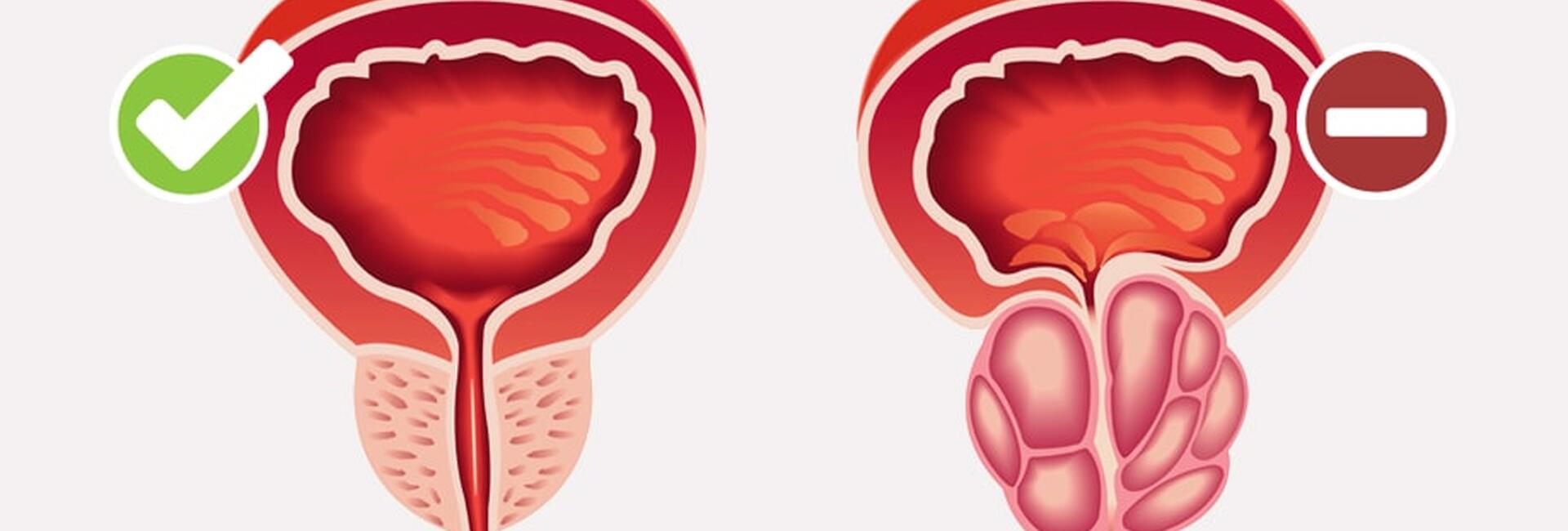


Prostate adenoma is a chronic disease in which prostate tissue grows abnormally. The process is benign, often associated with age: symptoms of pathology occur in 10% of 40-year-old men, and by the age of 80, the number of patients with prostate adenoma reaches 80-90%. The disease causes severe symptoms, can lead to kidney damage and cancer, and therefore requires treatment.
Reasons
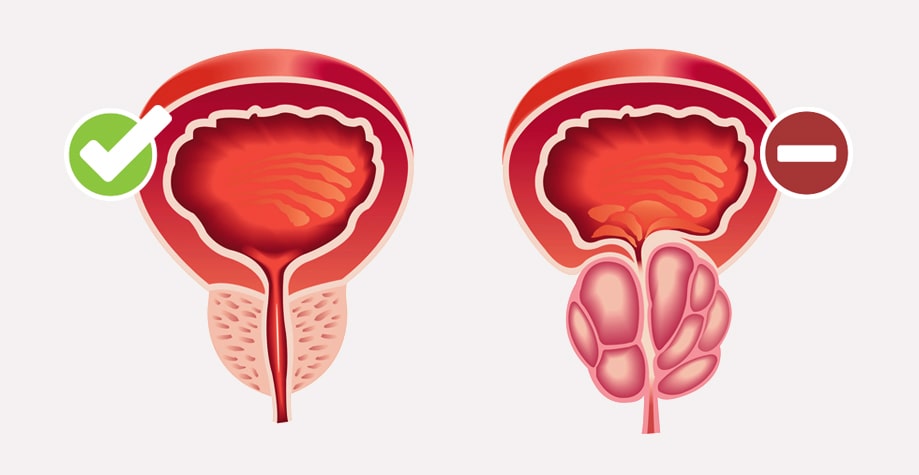
The main reason lies in the anatomy of the prostate gland. This organ, in fact, consists of many small glands, which are surrounded by smooth muscle cells and connective tissue.
Under the influence of certain factors, these small glands begin to grow, increase in size, and a benign tumor of glandular tissue develops - prostate adenoma. A synonym for this process is benign prostatic hyperplasia (BPH).
The most common causes of prostate adenoma:
-
infections of the reproductive system, chronic prostatitis;
-
stagnation of prostatic secretion, irregular sexual life;
-
diabetes;
-
obesity, metabolic syndrome;
-
irrational nutrition with excessive fat content and fiber deficiency;
-
alcohol abuse;
-
hypodynamia;
-
cardiovascular diseases;
-
disorders of the balance of sex hormones
There is evidence that the predisposition to prostate adenoma is inherited genetically. That is, if BPH was found in a man's family, then his brothers and sons have a higher risk of getting the disease.
Symptoms
The prostate is located so that its central part covers the area of the male urethra. When hyperplasia of the tissue of the prostate gland (a benign tumor) develops, the urethra in this place is compressed, and the outflow of urine is disturbed.
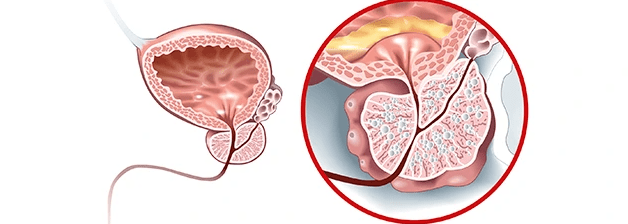
Because of this, when prostate adenoma occurs, the symptoms are quite typical:
-
the stream of urine weakens during urination;
-
urges are strong, up to urinary incontinence;
-
rickle is thin, lethargic, the man has to strain;
-
after going to the toilet, there is a feeling as if the bladder has not been emptied;
-
urges become a little more frequent, you have to get up at night;
-
blood impurities appear in urine and semen;
-
libido weakens.
The disease is insidious, symptoms develop slowly and imperceptibly. We recommend that you consult a urologist if at least one of the signs listed above appears. Or, if during the month you have to get up twice or more often at night to go to the toilet.
Universum clinic urologist consultation is available in Kyiv, Khmelnytskyi, Lviv and other cities where the clinic's branches are located. Do not delay: the progression of the disease can destroy the kidneys, often lead to cystitis. Also, similar symptoms occur during the development of prostate cancer - the most dangerous pathology, which is successfully treated in case of early detection.
Diagnostics
The first stage is a medical examination. The doctor questions the patient about the symptoms and manifestations of the disease, roughly determines the stage of the pathology (there are three of them in total).
Then proceed to the objective diagnosis of prostate adenoma:
-
urological examination with finger examination;
-
analyzes of urine and prostatic fluid;
-
smear from the urethra, bacteriological and cytological;
-
research of urodynamics, parameters of urination;
-
Ultrasound of the organs of the genitourinary system, including in the Doppler mode;
-
x-ray examination of the urinary tract with contrast, CT, MRI.
The accuracy of the diagnosis depends on the equipment of the clinic. In Kyiv and other Universum clinic branches, ultrasound using a transrectal sensor is actively used. This makes it possible to obtain maximum information about the state of the organ, to distinguish BPH from cancer.
After verification of the diagnosis of prostate adenoma, treatment is prescribed on an individual basis. The cause, the stage of the process, the patient's age and other important factors are taken into account.
Treatment
In the initial stages, it is possible to restrain the progression of the disease and relieve the man of symptoms in a conservative way. In advanced stages or when BPH has led to severe complications (bleeding, acute urinary retention), surgery is necessary.
Conservative approach
The goal of therapy is to reduce the volume of the prostate gland, unblock the urethra, and protect the patient from complications.
The following drugs are used for medical treatment of prostate adenoma:
-
hormonal agents that normalize the balance of sex hormones;
-
5-α reductase enzyme inhibitors;
-
group of α-adrenoblockers;
-
antagonists of muscarinic receptors;
-
phytotherapeutic agents;
-
some antibiotics;
-
amino acid complexes.
Medical treatment is usually carried out at home for a long time, several months. It is necessary to consult a doctor only for an examination and to choose a scheme. During treatment, the course may change, different drugs are combined to achieve a better effect.
Surgical approach
There are direct indications for surgical treatment of a benign neoplasm, not all patients undergo surgery. The help of a surgeon is required in case of acute retention of urine, bleeding (hematuria), in case of formation of bladder stones and danger of kidney damage.
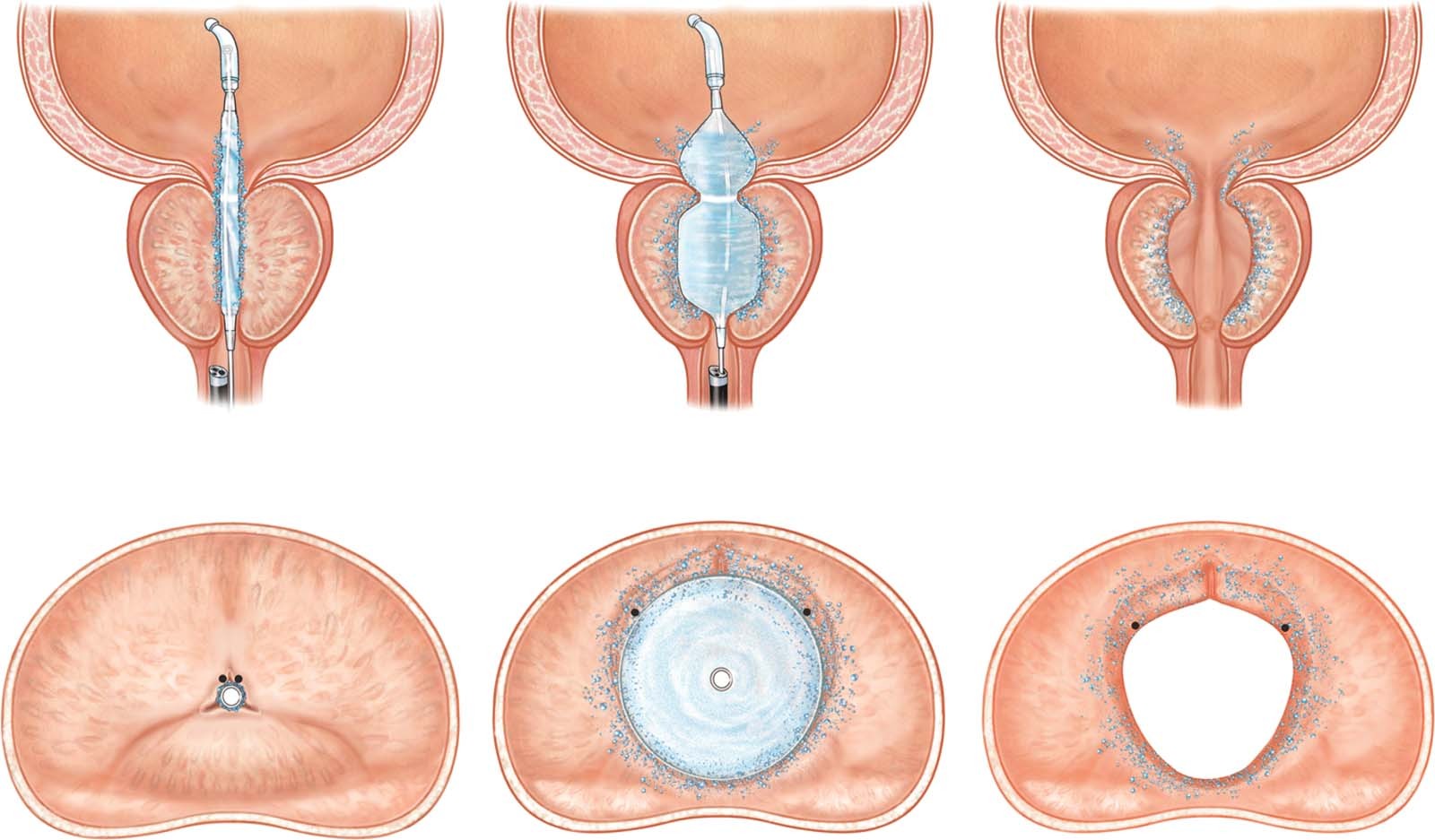
When a prostate adenoma is surgically removed, the operation is called an adenomectomy. Depending on the patient's condition and parameters of the disease, either invasive, with a skin incision, or non-invasive interventions (through the urethra, without an incision) are used.
Thermotherapy, the effect of high temperatures on the prostate gland, can also be used. By warming the tissues with a special instrument through the rectum, doctors restore normal urination, but such methods are effective only for the 1st and 2nd stages of the disease.
Please pay attention: if a man does not produce urine for 12-24 hours, urgent help of a urologist is required. This condition is dangerous, it is necessary to install a urinary catheter or make a puncture of the bladder to free it from fluid.
Prevention
It is not always possible to prevent the development of pathology: a hereditary large or hypertrophied gland will sooner or later cause characteristic symptoms. But it is possible to reduce the risk of neoplasms in young and middle age.
For the prevention of prostate adenoma, it is recommended:
-
protect against venereal infections;
-
lead a regular sex life;
-
avoid hypodynamia, a sedentary lifestyle or work;
-
eat a balanced diet;
-
after the age of 40 - undergo a preventive examination by a urologist annually.
Rehabilitation and nutrition
Drug therapy is carried out for a long time, makes it possible to reduce the size of the prostate gland without surgery and does not require special rehabilitation measures. As for surgical treatment, everything depends on the technique of adenomectomy.
Open intervention requires several days of rest and bed rest. In the case of minimally invasive transurethral surgery, the recovery period is shortened to 2–3 days.

The role of diet is noticeable at the stage of prevention or treatment of the early stages of the disease. Recommended:
-
add fruits and vegetables, healthy tomatoes, broccoli to the menu;
-
increase the share of unsaturated fats (olive oil);
-
organize fishing days (salmon);
-
for dessert - berries (blackberries, blueberries, raspberries).
The menu should limit fatty and fried meat, dairy products, starch and solid fats. Moderate consumption of alcohol, wine, does not increase the risk of BPH but can worsen the condition if the process is already developing.
Sources
- Kim EH, Larson JA, Andriole GL. Management of Benign Prostatic Hyperplasia. Annu Rev Med. 2016;67:137-51. doi: 10.1146/annurev-med-063014-123902. Epub 2015 Sep 2. PMID: 26331999.
- Vuichoud C, Loughlin KR. Benign prostatic hyperplasia: epidemiology, economics and evaluation. Can J Urol. 2015 Oct;22 Suppl 1:1-6. PMID: 26497338.
- Sharma M, Chadha R, Dhingra N. Phytotherapeutic Agents for Benign Prostatic Hyperplasia: An Overview. Mini Rev Med Chem. 2017;17(14):1346-1363. doi: 10.2174/1389557516666160621103817. PMID: 27337973.
- Deyirmendjian C, Elterman D, Chughtai B, Zorn KC, Bhojani N. Surgical treatment options for benign prostatic obstruction: beyond prostate volume. Curr Opin Urol. 2022 Jan 1;32(1):102-108. doi: 10.1097/MOU.0000000000000937. PMID: 34669611.
F. A. Q.
-
in the early stages, a medicinal approach is used;
-
conservative therapy is complex, combined, carried out for years;
-
sometimes thermotherapy, the application of high temperatures to the tissue of the prostate gland, has an effect;
-
in advanced stages of the disease, surgical intervention, adenomectomy is required;
-
the operation can be performed with a skin incision in the perineum, above the pubis, or endoscopically - through the urethra.
-
use diuretics;
-
endure problems with urination;
-
postpone consultation with a urologist at the slightest suspicion of BPH.
-
at night you have to get up to go to the toilet twice or more often;
-
the pressure of urine weakens;
-
urges become more frequent, but pain and cutting during urination, as a rule, are not noted;
-
there is an acute retention of urine, ischuria, which is associated with reflex mechanisms.
-
the main difference is that the malignant process progresses faster, there is pain in the perineum, and the general well-being worsens;
-
all other symptoms (problems with urination, blood in the urine, frequent urges) are possible, both for a benign and for a malignant disease;
-
only a specialist can accurately distinguish between these two neoplasms after examination (blood tests for tumor markers, ultrasound).

