Topical healthcare workshops in LUX-MEDIC CLINIC:

  • experienced and professional lecturers-doctors;
  • interesting, relevant and important medical topics;
  • provision of practical tools and exercises on psychological topics, evidence-based recommendations on medical topics;
  • individual training on the topic of interest of the Client;
  • accompanying each lecture/training with a presentation, which is then transferred to the Client for use;
  • the ability to make a video recording of the workshop;
  • new skills and knowledge;
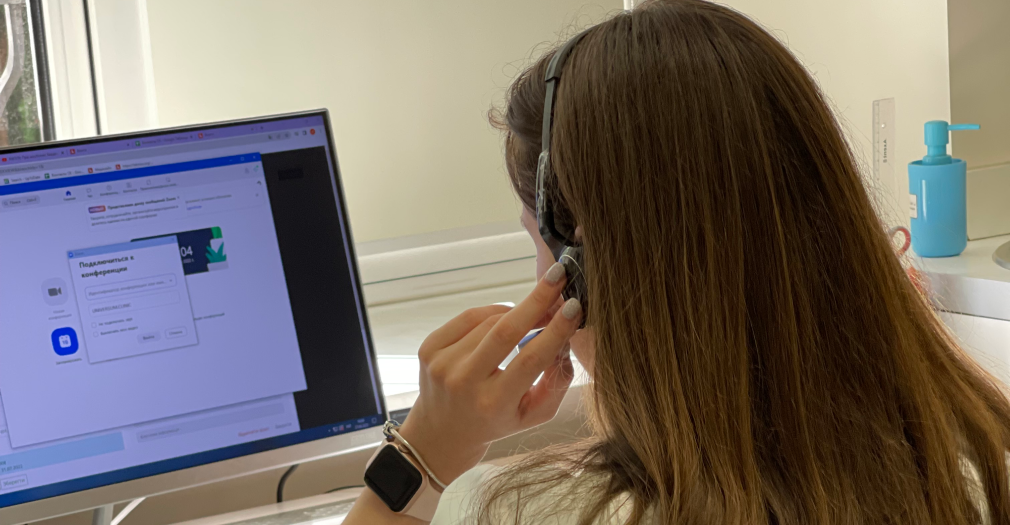
  • any format convenient for the Client: face-to-face (at the Client's location) or online (Zoom, Teams, Google Meet).

Lectures from LUX-MEDIC CLINIC specialists

Lectures about mental health:

How to provide psychological support to yourself and others
  • What is psychological help? 
  • Psychological self-help. 
  • Psychological help in the family. 
  • Psychological assistance in the community. 
  • Professional psychological assistance. 
  • How to give and how to receive.
Emotions: why do we need them and how to regulate them
  • Emotions: feelings, mood and affect.
  • Three ways of emotion regulation: psychological, physiological and biological.
  • Emotional marketing or how we are influenced by our emotions.
Emotional eating under stress
  • Against the background of stress, one of the effective ways to calm yourself down is food. We can unconsciously eat more and more often, although appetite is not controlled by hunger, but by feelings: "I'm scared", "I want to feel joy", "I'm anxious and I don't know how to help myself". As a result, against the background of long-term stress, excess weight may appear, but the emotional state is shaken even more, since total dissatisfaction with oneself is added to all problems.
  • At the lecture, you will be able to find other effective ways to overcome stress and separate physiological hunger from psychological hunger.
Our reactions to tragedy and loss
  • Everything about the protective mechanisms of the psyche, its adaptive properties, defenses that help isolate the affect, switch from negative thoughts, get positive emotions, restore psychological resources, how to help yourself and support a person in grief.
Stress resistance and how to live with long-term stress
  • The variety of stresses in our lives and what is the difference between them: stress, long-term or chronic stress, distress and eustress.
  • Long-term stress: risks and prevention of unwanted consequences.
  • Methods of increasing one's stress resistance
Delayed life syndrome
  • Delayed life syndrome (DLS)
  • Restoring the continuity of life - how to overcome the syndrome of delayed life?
Syndrome of emotional burnout at work
  • Stages of emotional burnout syndrome and how to help yourself at each of them.
  • Psychological climate in the team: empathy, communications, values, culture.
  • Work&Life balance: simple things that are difficult to do.
Resilience (ability to restore normal life after stress)
  • What is psychological resilience?
  • Basic elements of resilience.
  • What is my psychological resilience?
  • How to increase one's own psychological resilience?
War trauma and post-traumatic growth
  • Concepts of stress, trauma, psychotrauma: relationship and difference between them.
  • How to develop effective adaptation strategies and strengthen your post-traumatic growth.
Adaptation to a new life: refugee and resettlement
  • Coping with stress in a new place: psychological self-help and helping loved ones.
  • Restoring the continuity of life in conditions of uncertainty.
  • Psychological phenomena: refugee syndrome, survivor's guilt, witness trauma, vicarious trauma.
Concentration, motivation, discipline: how to master and apply to your advantage
  • Motivation and discipline: what's the difference?
  • How to add motivation and discipline to your life: planning, working with values, implementing rituals, creating your tribe, activating activities, the "empty box" strategy, the rule of "small steps".
  • Concentration of attention and how to maintain and develop it.
Relationships. Partnership. Marriage
  • Partnership in relationships: a model of healthy relationships, a happy marriage and its components.
  • Wartime and long-distance relationships.
  • The emotional sphere of men and women: the difference in experiencing emotions and myths, how to survive crises in relationships, etc.
Psychotherapist about Post-Traumatic Stress Disorder (PTSD)
  • Stress and types of mental reactions to it.
  • What is PTSD: manifestations and phases. 
  • How to reduce the risk of PTSD. 
  • Adaptive capabilities of the psyche and self-help techniques
Children's psyche and war
  • Peculiarities of perception and response.
  • How to maintain an emotional connection with children depending on their age, help them adapt to new life circumstances.
  • The role of parents in the child's stress resistance.
  • Psychotechniques that will come in handy in the parent-child triad.
Personal borders: my life, my rules
  • Personal boundaries: what they are.
  • When and how personal boundaries are formed.
  • How to define your personal boundaries?
  • Personal boundaries in the family and the boundaries of the family itself.
  • Personal boundaries in a dating-to-marriage partnership.
  • How to build personal boundaries at work and remain part of the team.

Lectures about health:

Headache, migraine
Coronavirus, pandemic, immunity and what to do with it all
Vaccines against COVID-19. Forewarned means armed
COVID-19: Symptoms, treatment, prevention
Planned vaccination of adults - what is it?
Oncosurveillance at a preventive medical examination
Facts and myths of oncology. What to know and what to forget
Guide to a healthy Ukrainian (what affects our health, screenings and prevention, etc.)
Food and hormones

Lectures about health safety:

Emergency care during wartime
Emergency aid during a chemical attack
Nuclear explosion/radiation leak: risks and safety

The cost of the lecture (online): UAH 4 000,00
The cost of the lecture (offline): UAH 5 600,00

(the cost is not tied to the number of participants)


F. A. Q.

If the lecture is online, who creates the link to the meeting?

The clinic works in the ZOOM application and can provide a link in this application to hold a lecture. If the client Company uses other applications in the business process and ZOOM is not convenient or not accepted, the doctor can conduct a lecture using the link provided by you in any other application or streaming platform.

How is a video recording provided after the lecture?
  • If the link to the meeting was provided by the Clinic, the video recording of the lecture is provided as a video file.
  • If the link to the meeting was created by the Client, the video recording is immediately made by the Client and remains with him.
Does the lecturer provide practical advice during the lecture?

Of course. Psychologists provide tools and exercises during lectures to be used later in life to restore and maintain your mental health. Specialists provide advice on disease prevention and maintaining good health.

Sign up for the doctor