







Back Pain: Symptoms and Treatment Back pain, or dorsalgia, is a common clinical syndrome that ranks second among the reasons for seeking medical attention (with respiratory infections being the first). More than 80% of people, both men and women, experience this unpleasant symptom at different ages.
 Most episodes of back pain are short-term and transient. However, approximately 5% of individuals with dorsalgia have it as a symptom of a severe spinal condition. Therefore, anyone regularly experiencing back pain, whether in the lower back or another part of the spine, should seek medical evaluation at a clinic.
Causes
Dorsalgia arises as a result of various pathological processes. The most common causes of back pain include:
-
Degenerative changes in intervertebral discs, lead to compression of spinal nerve roots.
-
Osteoporosis, osteochondrosis, and herniated intervertebral discs.
-
Persistent deformation of the muscular and ligamentous structures of the vertebrae often begins as poor posture or scoliosis.
-
Spinal injuries, whether seemingly minor or severe, affect the cervical, thoracic, or lumbar regions.
-
Physical overexertion and lifting heavy objects.
-
Lack of physical activity and muscle deconditioning that supports the spine.
-
Obesity and excess weight, accelerate degenerative changes in the vertebrae and are often accompanied by back pain.
-
Inflammatory processes, often of autoimmune nature.
-
Acute and chronic stress, depressive states leading to psychogenic back pain even in the absence of spinal issues.
-
Heredity, as some genetic syndromes are associated with spinal, muscular, and ligamentous abnormalities and manifest as dorsalgia.
Most commonly encountered in clinical practice is the first mechanism, which is degenerative and represents a kind of "wear and tear" of the spine's bones.
The second most frequent mechanism for the onset of back pain is the myofascial syndrome. It begins with muscle spasms in a particular section of the spine, leading to pain. If the pain syndrome is not quickly relieved, the spasms intensify, exacerbating the pain. Until this vicious cycle is broken, persistent back pain will not subside.
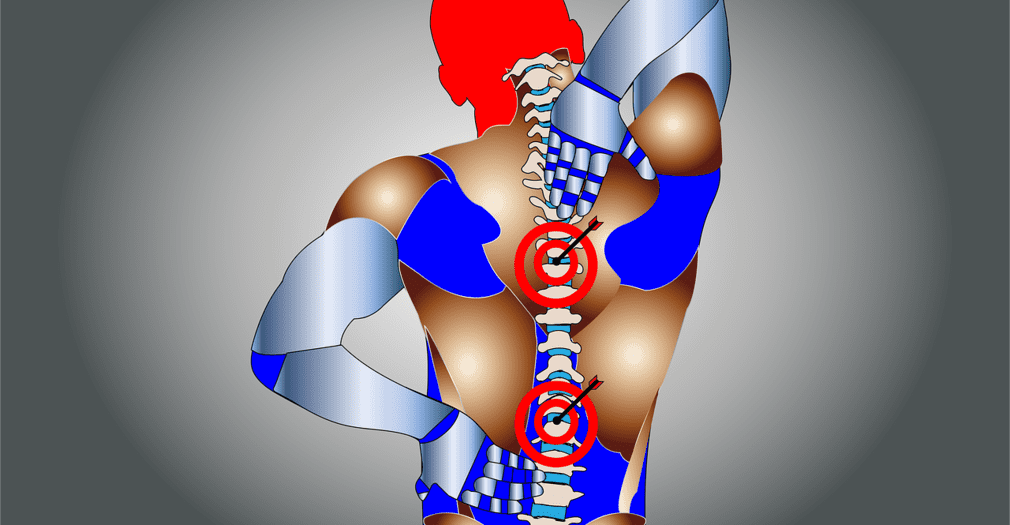
It is also essential to remember that dorsalgia can be a symptom of spinal cord disease, vertebral destruction due to tumors or infection (e.g., tuberculosis). Sometimes, people even fracture their vertebrae and remain unaware of it for some time until severe back pain prompts them to seek medical attention.
Symptoms
The manifestations of dorsalgia depend on the localization of the pathological process and the condition of the spinal cord. The most commonly affected areas are the cervical (cervicalgia) and lumbar (lumbalgia, lumbago) regions of the spine. The cervical region is often affected due to its small vertebrae, and the lumbar region because it bears the weight of the entire torso and the loads that a person moves.
In terms of clinical course, three types of back pain are distinguished:
-
Acute dorsalgia: It occurs suddenly, is severe, and lasts up to 2-4 weeks.
-
Subacute dorsalgia: Varies in intensity and persists for 1-3 months.
-
Chronic back pain: Can develop either abruptly or gradually but, in any case, lasts for more than 3 months, with varying intensity.
In each of these three cases, the underlying condition causing the pain can either be limited to a spinal injury or involve the spinal cord as well.
Without a neurological component
In this variant of the pathological process, only the spinal column and its musculoskeletal apparatus are affected.
Symptoms may include:
-
Stiffness and pain in the spine after staying in one position, especially in the morning after sleep.
-
Sudden back pain when lifting heavy objects or making sudden movements.
-
The appearance or exacerbation of pain when walking, running, or at the end of a workday.
-
Difficulty bending or straightening the back.
-
The presence of a spastic area of muscles near the spine that can be felt with the fingers.

Sometimes, the symptoms can arise from processes unrelated to the spine. For example, they can occur in conditions like kidney stones (renal colic) or muscle inflammation (myositis).
With a neurological component
This type of back pain is accompanied by damage to either the spinal cord or the nerve roots branching off it (radicular syndrome). Consequently, the following symptoms may occur:
-
Radiation of the pain impulse to other parts of the body (scalp in cervicalgia, chest area in thoracalgia, leg in lumbalgia or sciatica).
-
Altered skin sensitivity, numbness of the skin and muscles.
-
Sensations of tingling or "pins and needles" in the leg, arm, or neck.
-
Problems with pelvic organs (urinary and fecal incontinence, erectile dysfunction in men).
-
Areas of skin, for example, on the legs, becoming dry and losing hair.
The neurological component typically arises due to the narrowing of intervertebral foramina, spinal canal stenosis, or trauma. This variant of dorsalgia is generally more concerning.
Diagnosis
Many people ignore the problem until it leads to a loss of ability to work or a severe immobilizing episode. It's not recommended to wait for such issues. If back pain persists for 1-2 weeks, it's advisable to seek medical attention. Specialists at UNIVERSUM.CLINIC can help identify the cause and address the situation.
The diagnosis of dorsalgia involves:
-
Medical examination and consultations with neurologists and psychologists.
-
Radiological methods, CT scans, and MRI scans.
-
Functional tests and assessments.
-
Ultrasound examinations, including Doppler.
-
Tests for infections (including herpes and tuberculosis).
-
Tests for autoimmune processes.
-
Electrophysiological studies to assess the condition of the spinal nerve roots.
After a comprehensive assessment, the affected area of the spine is identified, and the cause of the problem is determined. Then, treatment for back pain is initiated based on an individualized plan.
Principles of Treatment
There is no universal approach that can cure all types of back pain. The treatment strategy should be individually tailored to each patient based on the underlying cause of the pain.
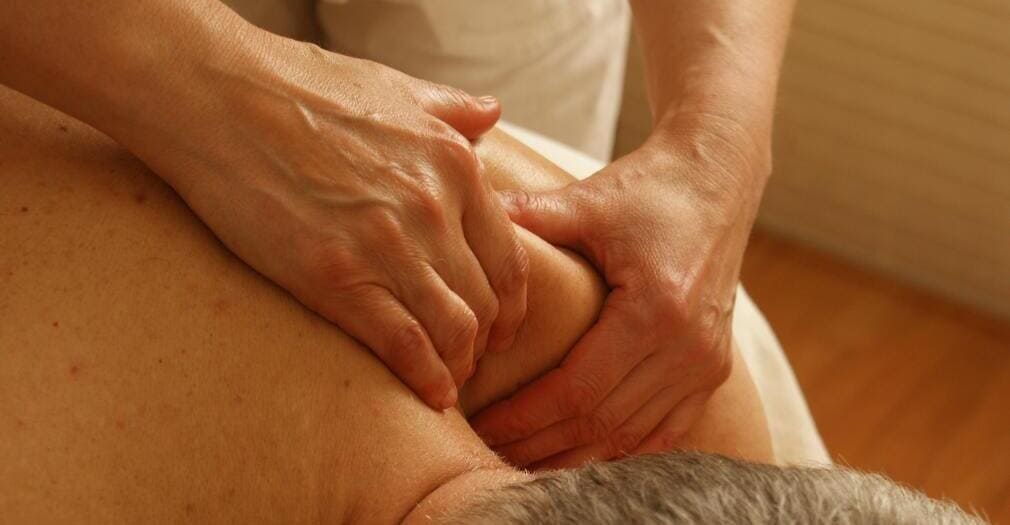
The main principles that guide the algorithm for treating back pain are as follows:
-
Identify and eliminate factors that trigger episodes of pain.
-
Halt degenerative processes in the bones and cartilage of the spine.
-
Relieve pain and subsequently address muscle spasms.
-
Correct neurological disorders.
To achieve these goals, various methods are employed:
-
Reduce the load on the spine with orthoses and orthopedic measures.
-
Use anti-inflammatory drugs and analgesics.
-
Administer muscle relaxants and tranquilizers.
-
Employ chondroprotective agents and metabolic therapy.
-
Administer vitamin B complex supplements.
-
Use medications to improve microcirculation.
-
Apply physiotherapeutic procedures and reflexology.
-
Provide sessions of manual therapy, massage, and therapeutic exercise.
In cases of acute pain, nerve blockades may be performed in a clinical setting if necessary.
If therapy is initiated in a timely manner and is well-structured, the patient's condition can improve within the first few days of treatment. However, in cases of complex pathology or if the condition has progressed significantly, surgical intervention may be required.
Prevention
Unfortunately, there are no guaranteed methods to completely prevent dorsalgia. However, you can reduce the likelihood of developing such a syndrome through relatively simple measures:
-
Maintain a healthy weight: Keeping your body weight within a healthy range can reduce the risk of back pain.
-
Protect your back from injuries: Use headrests in cars, lift objects correctly (not in front of you, and avoid twisting your torso while lifting).
-
Learn relaxation techniques: Stress can contribute to back pain, so learning relaxation techniques can help.
-
Use orthopedic mattresses and pillows: These can provide better support for your spine while sleeping.
-
Engage in regular exercise: Regular physical activity, including back-strengthening exercises, can help prevent back pain.

When back pain, whether in the lower back, chest, or neck, persists for more than 2-3 weeks, it is advisable to consult a specialist for evaluation, clarification of the underlying cause, and treatment. You can even seek a consultation with a neurologist from UNIVERSUM.CLINIC online.
Sources
- Casiano VE, Sarwan G, Dydyk AM, Varacallo M. Back Pain. 2023 Feb 20. In: StatPearls [Internet]. Treasure Island (FL): StatPearls Publishing; 2023 Jan–. PMID: 30844200.
- See QY, Tan JB, Kumar DS. Acute low back pain: diagnosis and management. Singapore Med J. 2021 Jun;62(6):271-275. doi: 10.11622/smedj.2021086. PMID: 34409471; PMCID: PMC8801838.
- Steinmetz A. Back pain treatment: a new perspective. Ther Adv Musculoskelet Dis. 2022 Jul 4;14:1759720X221100293. doi: 10.1177/1759720X221100293. PMID: 35814351; PMCID: PMC9260567.
- Lassiter W, Allam AE. Inflammatory Back Pain. [Updated 2022 Sep 5]. In: StatPearls [Internet]. Treasure Island (FL): StatPearls Publishing; 2023 Jan-. Available from: https://www.ncbi.nlm.nih.gov/books/NBK539753/
- Cohen SP. Epidemiology, diagnosis, and treatment of neck pain. Mayo Clin Proc. 2015 Feb;90(2):284-99. doi: 10.1016/j.mayocp.2014.09.008. PMID: 25659245.
F. A. Q.
Relief from back pain depends on its cause and nature. Here are some general recommendations:
-
Ensure Rest: The first step in acute back pain is to ensure rest. Try to avoid exerting your back.
-
Use Creams and Gels: Apply a cream or gel with anti-inflammatory properties to the affected area.
-
Use NSAIDs: Non-steroidal anti-inflammatory drugs (NSAIDs) can help alleviate pain and inflammation. However, their use should be guided by a doctor's advice.
-
Apply Cold and Warm Compresses: A cold compress can be useful in the initial minutes after an injury. A warm compress may help if the pain is due to muscle spasms.
-
Maintain Activity: Prolonged bed rest is not recommended as it may exacerbate the problem. Follow the doctor's recommendations regarding activity.
-
Consult a Doctor: If back pain persists for 2-3 weeks or is acute, it is important to seek the advice of a specialist for a more accurate diagnosis and appropriate treatment.
-
Specific Massage and Relaxation Techniques: Massage and relaxation techniques can help alleviate muscle tension and reduce pain.
-
Medications: Analgesics and anti-inflammatory drugs can be applied topically or taken orally.
-
Cold and Warm Compresses: The use of cold in the initial stage and warm compresses for muscle spasms can help alleviate pain.
-
Physiotherapy: Specific exercises to strengthen the back can be helpful in the long term.
-
Posture Correction: Improving poor posture can reduce strain on the back.
Yes, you can apply heat to the back for back pain, but it should not be used if the pain is due to a recent injury. Be cautious to avoid burns, especially if there is any loss of sensitivity in the affected area due to nerve issues. In cases of fresh trauma or suspicion of infection or tumor, heating procedures are contraindicated.
-
Avoid heavy physical labor.
-
Don't stay in one position (lying down or sitting) for too long.
-
Refrain from activities or exercises that worsen the pain.
-
Avoid getting too cold.
-
Do not delay consulting a specialist when experiencing any symptoms of nerve root compression (numbness, tingling, muscle weakness, "locking" episodes).
-
Assesses posture and spinal deformities.
-
Checks the range of motion in the spinal column.
-
Palpates areas of muscle spasm and identifies trigger points.
-
Evaluates tendon reflexes.
-
Organizes instrumental examinations (X-rays, CT scans, MRI scans).
-
Assesses the results and develops a treatment plan.
