







Urinary incontinence is a pathological condition in which urine is released involuntarily, regardless of a person's will and desire. The volume of leakage can be from drops to uncontrolled emptying of a full bladder. Doctors call this phenomenon incontinence, and it is a common problem in female urology: at the age of 50, every third woman suffers from it, and after 70, every second woman suffers from it. In men, urinary incontinence occurs somewhat less often. Unfortunately, children are not immune from this pathology either.
Causes
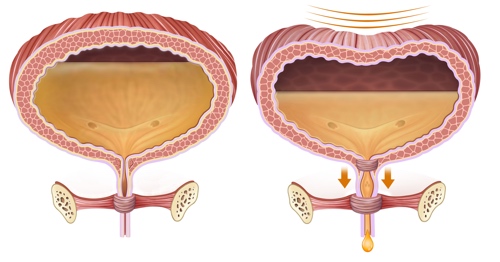
A person is able to control urination thanks to two mechanisms:
1. Pelvic muscles that cover the urethra in its upper part.
2. Neurological centers that control these muscles (located in the brain and spinal cord).
Incontinence occurs when there are disturbances in this system, in one or both of its parts at once.
As a rule, the causes of urinary incontinence are:
- several pregnancies during life;
- rapid or, on the contrary, protracted childbirth (overstretching of the musculo-ligamentous apparatus in the small pelvis);
- spine injuries with damage to the spinal cord centers that control the tone of the urethral sphincters, contraction of the bladder muscles;
- excessive physical exertion, conditions that increase the pressure in the abdominal cavity (for example, frequent constipation);
- inflammatory diseases of the lower parts of the urinary tract;
- operations on pelvic organs;
- sedentary way of life and work;
- brain and/or spinal cord dysfunction;
- tumors of the pelvic organs;
- congenital anomalies of the structure of the urinary canal, pelvic organs.
Age-related urinary incontinence, characteristic of women, is also common. It occurs as a result of a decrease in the synthesis of estrogens, due to which the elasticity of the ligaments in the pelvis deteriorates. Age-related incontinence can be one of the manifestations of climacteric syndrome.
Types of urinary incontinence
Classification of types of urinary incontinence is necessary in order to choose the optimal method of treatment of the pathology. In this regard, the types of incontinence differ according to the reasons that cause the problem:
- stress urinary incontinence, when control over urination is suddenly lost due to a strong psycho-emotional factor or physical stress, typical for women;
- urgent, the person is unable to maintain the proper tone of the sphincters of the urethra by volitional effort (hyperactive bladder);
- neurogenic, caused by neurological reasons, this category also includes bedwetting - enuresis;
- iatrogenic, resulting from medical interventions or the use of certain drugs;
- mixed, when urinary control is disturbed due to the influence of several causes at the same time;
- determined anatomically against the background of congenital anomalies (typical for childhood).
A typical cause of urinary incontinence in men is prostate surgery. During such interventions, the sphincter of the bladder or urethra can be damaged, and the man loses control over urination.
Also, incontinence can be periodic (stressful, urgent, enuresis) or permanent (neurogenic, iatrogenic, age-related, due to anatomical anomalies).
How dangerous is urinary incontinence?
If you ignore the problem, use diapers or pads, you can partially get rid of its symptoms (odor, wetness in the groin). However, such measures will not help prevent the risks of incontinence.
Common complications of urinary incontinence:
- chronic cystitis, pyelonephritis;
- inflammation of the external genitalia (vulvitis in women, balanoposthitis in men);
- damage to the skin of the perineum, dermatitis, infections;
- psychological discomfort, neuroses, social problems
We are propose contacting the Lux-Medic Clinic in case of any symptoms (the smell of urine from underwear or pads, wetness in the groin, etc.). A qualified doctor will perform an examination, find out the cause and help the person regain control over urination.
What examinations are necessary for the diagnosis of incontinence
In order to draw up an effective treatment plan, it is necessary to establish the cause of the pathological condition. For this, Lux-Medic Clinic uses informative and modern methods:
- Ultrasound of the pelvic organs in all variants of the technique, including transvaginal, transrectal;
- X-ray methods - CT scan, excretory urography, retrograde urethrocystography to detect abnormalities of the urinary outflow tract;
- urodynamic examination helps to assess the functional state of the urinary system;
- bladder uroflowmetry shows the state of muscle tone of this organ;
- if necessary - MRI.
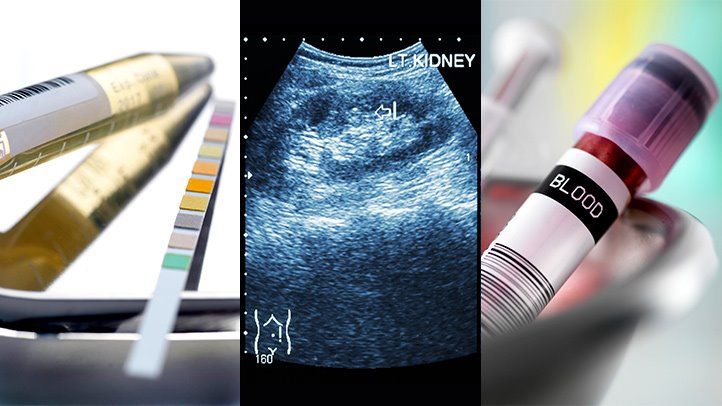
In addition, general clinical and biochemical tests of blood, urine, and research on the level of sex hormones are carried out in elderly patients and patients with symptoms of the climacteric syndrome.
Treatment of urinary incontinence
An individual approach to each patient helps to get rid of incontinence forever.
Conservative treatment
Depending on the identified cause of the pathology, the following are used:
- methods of correction of the psycho-emotional state;
- physical therapy sessions to strengthen the muscle layers of the pelvic floor, effective for the initial manifestations of urinary incontinence;
- drugs that restore muscle control to a person;
- physiotherapeutic methods to restore adequate neuromuscular transmission, activation of regeneration processes in muscles and ligaments.If the listed methods are not suitable, surgical intervention is performed.
Surgical treatment
Incontinence operations are based on several approaches. Some are used to treat urinary incontinence in women, others are suitable for patients of both sexes.
Options for surgical treatment of incontinence:
- laparoscopic fixation of the uterus, used in case of prolapse of the organ and associated leaks;
- colporrhaphy, strengthening of ligaments of the vagina and the urinary bladder located above it;
- elimination of congenital or acquired anomalies of the body, urinary system, pelvic structures;
- application of slings - flaps of synthetic fabric strengthen sagging ligaments and muscles, create support for the neck of the bladder, the middle part of the urinary canal.
In the case of neurogenic incontinence, for example, in spinal patients, electromyostimulation can be used.
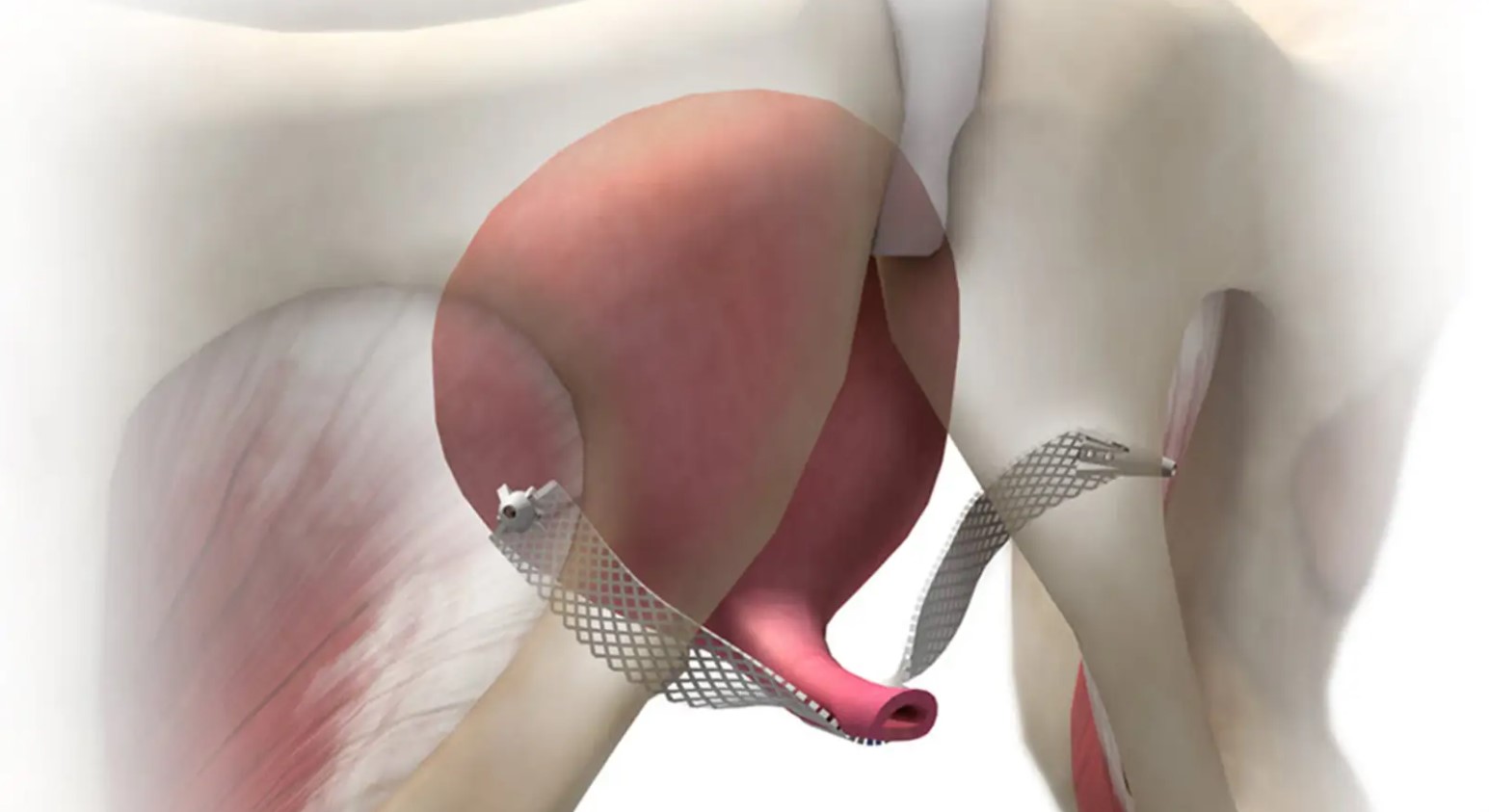
Lux-Medic Clinic specialists decide which approach to choose after a thorough inspection and examination of the patient. The goal is to completely get rid of urinary incontinence and avoid its recurrence
Prevention of urinary incontinence
There are no specific measures that are guaranteed to prevent the development of incontinence. However, non-specific measures are known, thanks to which it is possible to reduce the risk of developing urinary incontinence in women and men:
- monitor body weight, maintain it in optimal parameters;
- practice special exercises to strengthen the muscles of the pelvic floor;
- eat properly to prevent constipation;
- use the services of reliable medical centers for prompt treatment.
Starting after 40, it will be useful to undergo, at least annually, preventive examinations by a gynecologist and a urologist.
References
- Hersh L, Salzman B. Clinical management of urinary incontinence in women. Am Fam Physician. 2013 May 1;87(9):634-40. Erratum in: Am Fam Physician. 2013 Oct 1;88(7):427. PMID: 23668526.
- Bardsley A. An overview of urinary incontinence. Br J Nurs. 2016 Oct 13;25(18):S14-S21. doi: 10.12968/bjon.2016.25.18.S14. PMID: 27734727.
- Robles JE. La incontinencia urinaria [Urinary incontinence]. An Sist Sanit Navar. 2006 May-Aug;29(2):219-31. Spanish. doi: 10.4321/s1137-66272006000300006. PMID: 17001359.
- 4. Börgermann C et al. The treatment of stress incontinence in men. Dtsch Arztebl Int. 2010 Jul;107(27):484-91. doi: 10.3238/arztebl.2010.0484. Epub 2010 Jul 9. PMID: 20661415; PMCID: PMC2908931.
F. A. Q.
- normalization of nutrition, stool;
- gymnastics for the muscles of the pelvic floor, girdle of the lower limbs;
- sex hormone preparations;
- applying slings (sling operations);
- treatment of diseases for which urinary incontinence is one of the symptoms.
- normalization of nutrition, stool;
- gymnastics for the muscles of the pelvic floor, girdle of the lower limbs;
- sex hormone preparations;
- applying slings (sling operations);
- treatment of diseases for which urinary incontinence is one of the symptoms.
- most forms of this pathology are completely curable;
- in case of ineffectiveness of physical exercises and conservative therapy, surgical interventions are used.
- with age, the tone of the muscles that squeeze the urinary canal and prevent involuntary urination decreases;
- internal organs are displaced and lowered (splanchnoptosis), which affects the function of the sphincters of the bladder and urethra;
- nervous regulation of urges to urinate and their implementation weakens;
- blood circulation in the pelvic organs is disturbed;
- the impact of other diseases increases, for example – due to arthritis, an old person simply does not have time to go to the toilet.
- urinary incontinence belongs to the field of urology;
- for diagnosis and treatment, women can consult a gynecologist.


