






Price and services
Gonorrhea (also known as the clap) is a common sexually transmitted infection (STI) caused by the bacterium Neisseria gonorrhoeae, which belongs to the category of diplococci.

This disease is dangerous because gonococci can infect not only men and women but also children. They can reside on the mucous membranes of the urogenital tract and internal reproductive organs, infect the conjunctiva of the eyes, and the respiratory system's epithelium. Gonorrhea often co-occurs with other STIs, such as trichomoniasis and chlamydia. Unfortunately, there is an increasing resistance of the causative agents to traditional antibiotics, which is why successful treatment requires an individual approach and specialized testing.
We recommend contacting LuxMedic Clinic if you have any suspicion of a venereal infection. Our doctor will help establish the correct diagnosis and select an effective treatment course with laboratory confirmation of recovery.
How Gonorrhea Is Transmitted
The primary mode of infection transmission is through unprotected sexual contact. Pathogenic microorganisms, upon entering the epithelium, penetrate the tissues within 10-15 minutes and, after an incubation period lasting 24-48 hours, cause an inflammatory process.
Significant routes of gonorrhea transmission include:
-
Unprotected sexual intercourse (oral, anal, traditional sex).
-
Kissing (through saliva).
-
Petting (manual stimulation).
-
Common household items (towels, toilet seats).
This infection is highly dangerous for infants who can get infected during childbirth from mothers with gonorrhea, which can lead to irreversible blindness due to eye inflammation. In adults and children, eye infection can also occur through contaminated hands.

The problem is that gonococci suppress the immune system at the site of entry, making the inflammatory process often go unnoticed. People usually seek medical attention when fresh gonorrhea has already turned chronic (more than 2 months after infection), and complications of the infection have arisen.
Common Symptoms of Gonorrhea
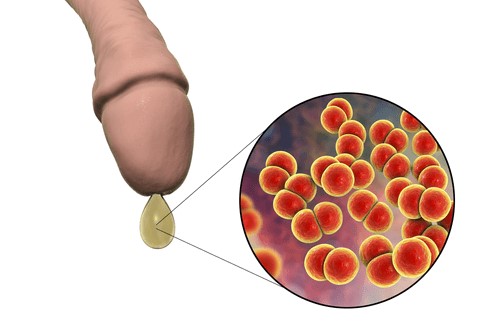
The condition got its second name, the clap, due to the characteristic purulent discharge from the urethra, originating from the German word "trophen," meaning "a drop." Indeed, in cases of sexual transmission, the first symptom of gonorrhea will be genital discharge, but it's important to note that the symptoms depend on the mode of infection.
In the case of a recent infection, typical symptoms of gonococcal infection appear 1-2 days after transmission:
-
Burning and itching in the urethral area (typical for men).
-
In women, inflammation of the vagina and the development of vaginitis.
-
Pus discharge from the genitals, sometimes scanty, noticeable on underwear and bedsheets.
-
Pain in the rectum, presence of mucus and pus in stools (gonorrheal proctitis).
-
Dryness and sore throat, itching (pharyngitis in the case of oral transmission).
-
Swollen eyelids, painful sensitivity to light, tears, and pus discharge from the eyes (gonococcal conjunctivitis).
Unfortunately, this visible clinical picture is only present in 40% of affected individuals. In the remaining 60% of cases, the infection process occurs with mild and subtle symptoms.
For both women and men, it's advisable to visit a clinic for anonymous testing 2-3 days after an episode of unprotected intimate contact. This can help detect the disease at an early stage or provide confidence in one's own health.
Symptoms of Chronic Gonorrhea
Within 1-4 weeks after infection, gonococci spread through the genital tract and affect the reproductive organs.
In men, chronic gonorrhea leads to total urethritis, prostatitis, vesiculitis, and orchitis:
-
Dripping pus discharge from the urethra, burning during urination.
-
Pain during erection and ejaculation.
-
Discomfort in the perineum, difficulty urinating.
-
Pain in one or both testicles, swelling of the scrotum.
-
Groin pain radiating to the lower abdomen.
In women, long-standing gonorrhea manifests as vulvovaginitis, urethritis, cystitis, endometritis, and salpingo-oophoritis:
-
Problems with urination.
-
Purulent or mucopurulent vaginal discharge, bloody spotting.
-
Dull or cramp-like lower abdominal pain, menstrual cycle disturbances.
A severe complication of gonorrhea in women is pelvic inflammatory disease (pelvic peritonitis), which presents with fever and severe lower abdominal pain, often accompanied by vomiting.
It's important to note that these symptoms can occur in an individual in isolation or in combination with several others. Additionally, the severity of symptoms varies, and in cases of chronic infection, exacerbations can occur periodically after periods of apparent improvement.
Any suspicion of these symptoms should not be ignored, and it is crucial to seek medical attention. A specialist at LuxMedic Clinic can assist in diagnosis and treatment, preventing severe consequences of the infection.
Complications of Gonorrhea
Inflammation caused by gonococci is relentless. In the affected areas, adhesions, scars, and impaired function of the organs infected by the bacteria can occur.
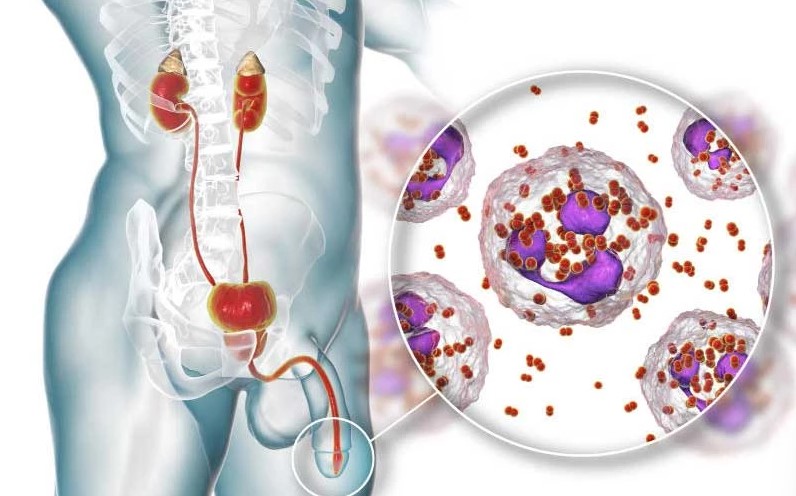
If left undiagnosed and untreated, gonorrheal infection can lead to significant consequences:
-
The formation of bacterial reservoirs in tissues where drugs have poor penetration.
-
Scarring changes, adhesions in the urethra, fallopian tubes, ovaries, prostate, and testicles.
-
The urinary system can be affected, leading to chronic cystitis and pyelonephritis.
-
Joints, especially the knee, may become inflamed.
-
Eye infection can cause blindness, especially in cases of ocular involvement.
Gonorrhea can have severe complications in women, as scarring in the fallopian tubes and inflammation of the ovaries may result in irreversible infertility, even after successful treatment of the infection.
Diagnosis
A qualified doctor can determine the presence of the disease based on the patient's history, complaints, and examination. In some cases, this may be sufficient to initiate treatment.
To confirm the diagnosis, a gonorrhea test is performed, typically involving a swab from the urethra, which is taken on the day of the clinic visit. It's important not to urinate for 3-4 hours before providing the sample.
Additionally, a culture of the specimen is grown on nutrient media to determine the sensitivity of the microorganisms to specific antibiotics. This test definitively answers all questions regarding the diagnosis and identifies which antibiotics the microorganisms are susceptible to.
Blood tests for gonorrhea are generally not informative and are conducted only when a doctor deems it necessary to clarify certain details, such as identifying co-infections.
Modern, rapid, and precise diagnostic methods include PCR tests. This test can be performed within a day and can detect the disease even with a small number of pathogens.
Treatment of Gonorrhea
In recent years, there has been a trend of microorganisms becoming resistant to a range of antibiotics. Therefore, treatment for patients with a confirmed diagnosis of gonorrhea should be individualized and comprehensive.
A doctor at LuxMedic Clinic will develop a treatment plan based on laboratory test data and the patient's individual condition.

The treatment regimen may include:
-
Antibiotics to which Neisseria gonorrhoeae is still sensitive.
-
Immunomodulators.
-
Gonorrhea vaccine.
-
Enzyme preparations.
-
Vitamin therapy.
Local treatment methods may also be required:
-
Flushing medicinal solutions into the vagina or urethra.
-
Vaginal and rectal suppositories.
-
Eye drops and ointments for eye involvement.
Physiotherapeutic methods may be used to manage complications, including massage and electrotherapy for the prostate, laser therapy, and adhesiolysis if scarring is present.
Preventing Gonorrhea
Protecting yourself from gonococcal infection is not difficult if you follow three principles:
-
Avoid casual sexual contact.
-
Use condoms.
-
Seek medical attention for testing and treatment if you have any doubts about your health.
A doctor at LuxMedic Clinic can provide delicate and anonymous assistance in establishing a diagnosis, prescribing treatment, and monitoring its effectiveness.
Sources
- Unemo, Magnus et al. “Gonorrhoea.” Nature reviews. Disease primers vol. 5,1 79. 21 Nov. 2019, doi:10.1038/s41572-019-0128-6
- Unemo, Magnus, and William M Shafer. “Antimicrobial resistance in Neisseria gonorrhoeae in the 21st century: past, evolution, and future.” Clinical microbiology reviews vol. 27,3 (2014): 587-613. doi:10.1128/CMR.00010-14
- Chue, P W. “Gonorrhea-its natural history, oral manifestations, diagnosis, treatment, and prevention.” Journal of the American Dental Association (1939) vol. 90,6 (1975): 1297-1301. doi:10.14219/jada.archive.1975.0246
F. A. Q.
-
Do not urinate for 3-4 hours before testing.
-
A gentle external genital hygiene is performed before testing.
-
A thin probe is inserted into the urethra or vagina to collect a swab.
-
If the eyes or throat are affected, a swab is taken using a cotton swab.
-
Blood tests for gonorrhea are taken on an empty stomach, from a vein.
-
The duration of the course is determined by the doctor.
-
If susceptibility to the selected antibiotic is preserved, one application may be sufficient.
-
If the infection is chronic and co-occurs with other STIs, treatment may last 10-14 days.
-
Pus or mucopurulent discharges from the urethra and genital tract.
-
Scanty, resembling drops, which can be hard to notice.
-
In complicated cases, the volume of discharges may increase.
-
Subclinical, unnoticed inflammation leads to infection spread.
-
Gonococci can affect and damage not only the urogenital system but also the respiratory tract, eye organs.
-
Chronic inflammation can lead to adhesions and infertility.
-
Severe peritonitis can develop in women.


