







Hymenoplasty or refloration, revirginization is the restoration of virginity or its imitation. The operation belongs to the field of plastic surgery and has a long history: the first refloration was performed in 1962. Nowadays, at LuxMedic Clinic, modern and advanced medical technologies are used to restore virginity, allowing a woman to become a chaste woman for her man. Regardless of the causes of defloration or its duration, without complications.

When hymenoplasty is needed?
Science does not know why nature gave a person virginity. Nevertheless, girls have a thin film with pores at the entrance to the vagina for the outflow of menstrual blood. Doctors call it a hymen (Latin - hymen, after the ancient Roman god of marriage, Hymenaeus).
Hymen rupture, defloration, usually occurs during the first sexual intercourse. Sometimes defloration is caused by specific injuries, surgeries, and sexual toys. The hymen is completely destroyed after childbirth.
Women may have to restore their virginity or imitate the presence of a virgin hymen for various religious, personal, or ethical reasons.
Virginity restoration is carried out exclusively at the request of a woman, most often the procedure is used in the following situations:
-
damage to virginity as a result of a specific trauma or a low-skilled gynecological examination of a girl or young woman
-
loss of virginity due to an act of sexual violence;
-
a strict position of the chosen one or his/her family towards intimate relations before marriage;
-
the desire to give the partner unique sensations from sexual intimacy.
From a medical point of view, there are no conditions that require hymenoplasty.
Types of hymenoplasty
There are two options for refloration: suturing of virgin hymen flaps (short-term hymenoplasty) and three-layer (long-term).
Short-term plastic surgery
The main advantage is quickness: virginity can be restored a few days before the expected sexual intercourse.
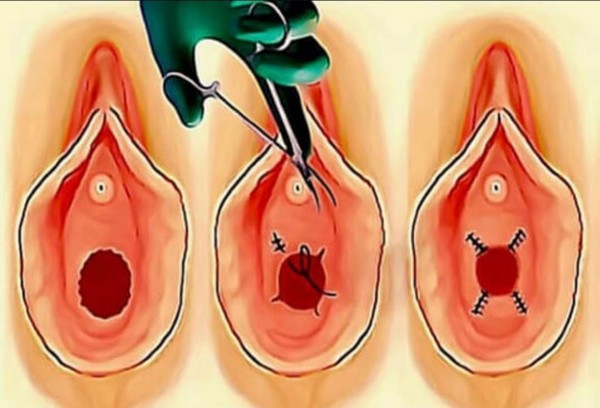
The procedure does not require general anesthesia, as our clinic uses atraumatic surgical needles and absorbable suture material.
However, this procedure also has disadvantages:
-
there may not be the expected blood stains after defloration;
-
the sutured flaps do not fuse, the integrity of the hymen is preserved until the threads dissolve (about 2 weeks);
-
not suitable if the hymen is absent (destroyed by childbirth, not developed at all or for other reasons).
The short-term hymen repair has the advantage that the procedure can be performed several times.
Long-term hymenoplasty
This is already a rather large-scale surgical intervention. It is used in the following cases:
-
a woman has given birth;
-
there is aplasia (congenital absence) of the hymen;
-
if you want to preserve the effect of chastity for a long time;
-
it is necessary to achieve the most plausible imitation of virginity.
Long-term hymenoplasty (also known as three-layer hymenoplasty) involves the placement of several stitches at the entrance to the vagina. The surgeon uses a needle to capture the folds of the mucous membrane, submucosa, and superficial muscle fibers, which are then fused together.
Atraumatic surgical needles are also used here, but it takes about a month for the tissues to fuse and restore the hymen, so you should avoid quick intimacy with your husband. However, the sensations during intercourse will be as realistic as possible, up to and including light bleeding after defloration.
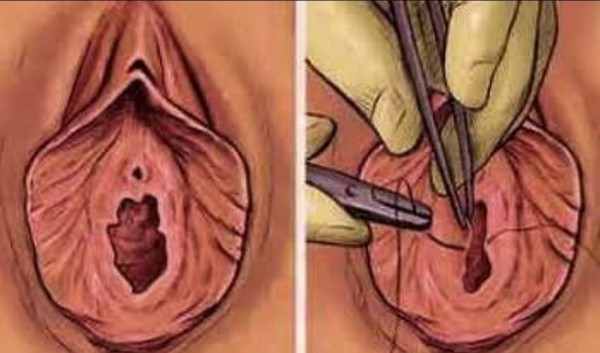
Among the disadvantages: it takes about a month to heal, after the operation, you need to limit physical activity.
Contraindications
Like any other operation, hymenoplasty has contraindications. There are few of them:
-
infections of the lower genital tract;
-
active bleeding from the genital tract, abnormal or physiological;
-
gross anatomical abnormalities, vulvar tumors.
A gynecologist at LuxMedic Clinic consults all patients before surgery. If it is possible, we correct the gynecological pathology in the clinic and then restore virginity.
Preparation for hymenoplasty
To guarantee success, you need to undergo a number of examinations before the intervention:
-
examination by a qualified gynecologist;
-
clinical, biochemical blood and urine tests;
-
gynecological smear for flora;
-
assessment of the blood coagulation system.
Primary diagnostics at LuxMedic Clinic does not take much time; in the absence of contraindications, virginity recovery can be performed on the same day a woman visits the clinic.
Sources
- Vojvodic M. et al. “Luminal Reduction Hymenoplasty: A Canadian Experience With Hymen Restoration”. Aesthet Surg J. 2018 Jun 13;38(7):802-806. doi: 10.1093/asj/sjy023. PMID: 29901714.
- Wiśniewska-Ślepaczuk K et al. “Review of Aesthetic Gynecologic Procedures for Women”. Plast Surg Nurs. 2021 Oct-Dec 01;41(4):191-202. doi: 10.1097/PSN.0000000000000400. PMID: 34871285.
- Saraiya HA. Surgical revirgination: Four vaginal mucosal flaps for reconstruction of a hymen. Indian J Plast Surg. 2015 May-Aug;48(2):192-5. doi: 10.4103/0970-0358.163060. PMID: 26424986; PMCID: PMC4564506.
F. A. Q.
-
short-term, stitching of the remaining hymen flaps, lasts up to 15 days;
-
long-term, three-layer, gives a permanent effect until the moment of repeated defloration.ф
-
religious requirements of the groom or his family regarding the bride's chastity;
-
a desire to restore virginity lost as a result of violence or trauma;
-
the wish to give the chosen one a special experience of intimacy.
-
after excluding contraindications, a woman sits in a gynecological chair;
-
local anesthesia is performed under aseptic conditions;
-
if the patient prefers short-term hymenoplasty and there are still flaps of hymen, they are painlessly stitched together, creating an analogue of a natural barrier;
-
when long-term refloration is performed, the gynecologist uses atraumatic needles to make several sutures at the entrance to the vagina, capturing three layers (mucous, submucous and superficial muscle);
-
both types of surgery do not require a hospital stay and are usually performed on the same day.
- No, active bleeding from the genital tract is a contraindication to virginity reconstitution, as it increases the risk of infectious complications and suture failure.


