







Amenorrhea is the absence of menstruation in women of reproductive age.
Actually, such a phenomenon by itself does not always indicate problems with women's health. For example, one cannot talk about amenorrhea in a teenage girl or in a woman who has gone through the climacteric syndrome. However, the reasons for the absence or disappearance of periods are too serious to ignore this symptom.

We recommend contacting a gynecologist at Universum clinic if menstruation has not started until the age of 14 (the deadline is 16) or does not come within 6 months before the onset of menopause (40-45 years). The examination will help to understand the situation, identify the cause of amenorrhea and, if necessary, eliminate it.
Types and causes of amenorrhea
The classification of menstrual disorders is complex and multi-level, because such conditions do not occur independently.
According to the level of disorders, there are hypothalamic, pituitary, ovarian, uterine, and thyroid-related amenorrhea. Pathology can also be organic or functional, psychogenic. In clinical practice, other classification criteria are used, which help specialists to better understand the woman's condition and provide her with adequate assistance, if necessary.
In general, clinical gynecological practice, the pathology is divided into several interconnected varieties:
- Physiological and pathological. In the first case, there is no threat to the woman's health, and the fact that there are no periods is a variant of the norm. In the second case, the absence of menstruation indicates problems in the woman's body, and sometimes very serious ones.
- Primary and secondary. Primary means that a girl older than 16 years has never had a period. They talk about secondary when a woman already had a regular menstrual cycle, but it was interrupted for 6 or more months in a row.
- True and false. The real one occurs as a sign of hormonal disorders in the hypothalamus-pituitary-ovary-endometrium system. False (cryptomenorrhea, hidden menstruation) is a consequence of anatomical abnormalities. For example, amenorrhea in teenagers due to a dense hymen without openings.
In gynecological practice, the most significant is the division of amenorrhea into physiological and pathological. Because it is this criterion that is used to assess the need for examination and treatment.
Physiological conditions
Absence of menstruation in women is a variant of the norm in the following periods:

- prepubertal period (up to 14–16 years) – the body is not yet ready for conception, the function of gonads and organs is insufficient;
- pregnancy – hormonal changes after conception exclude the maturation of new eggs, which is why menstruation disappears;
- the period of breastfeeding - during lactation, a new pregnancy would exhaust the female body, therefore nature blocks the development of new eggs;
- menopause period – hormonal stimulation of the ovaries weakens, in which follicles cease to form;
- changes in the use of contraceptives.
The difficulty is that physiological amenorrhea cannot always be distinguished from pathological amenorrhea based only on the signs of the course. The best thing is to entrust your health to a gynecologist at Lux-Medic Clinic and get advice from an experienced doctor.
Pathological conditions
Unfortunately, there are many more such reasons. Problems can arise both due to disorders of hormonal regulation of the cycle and due to anatomical anomalies.
The most common causes of pathological amenorrhea:
- various genetic anomalies, for example – Shereshevsky-Turner, Morris syndrome;
- eating disorders, anorexia or vice versa - obesity;
- PCOS – polycystic ovary syndrome;
- physical or psycho-emotional exhaustion, stress, depression;
- severe general somatic diseases;
- diseases of the thyroid gland;
- infectious lesions of the uterus, for example - endometritis due to gonorrhea;
- severe injuries, removal of the uterus or both ovaries;
- tumors of the brain, ovaries, radiation or chemotherapy of malignant processes.

Secondary amenorrhea can also occur in childbearing age as a result of the use of medicines. For example, some antidepressants and antiallergic drugs can disrupt the menstrual cycle. Are there stages in amenorrhea?
In some publications, there is such a concept as the stage of the process by duration:
- the first – lasts 6–12 months without menstruation;
- the second - from one to three years;
- the third - absence of menstruation for three years or more.
Apart from other classification criteria, such information has low significance. It only shows the approximate time when the course of any pathological process led to the cessation of menstruation.
We recommend not to wait months and years, but to contact the clinic as soon as signs of any gynecological pathology appear.
Symptoms of amenorrhea
As a rule, the absence of menstruation is itself a symptom of a disease. In order not to delay seeking professional help, we recommend that you pay attention to other symptoms that may occur shortly before the disappearance of menstruation, simultaneously with amenorrhea, or shortly after it.
The accompanying manifestations are varied, depending on the underlying cause of the pathology:
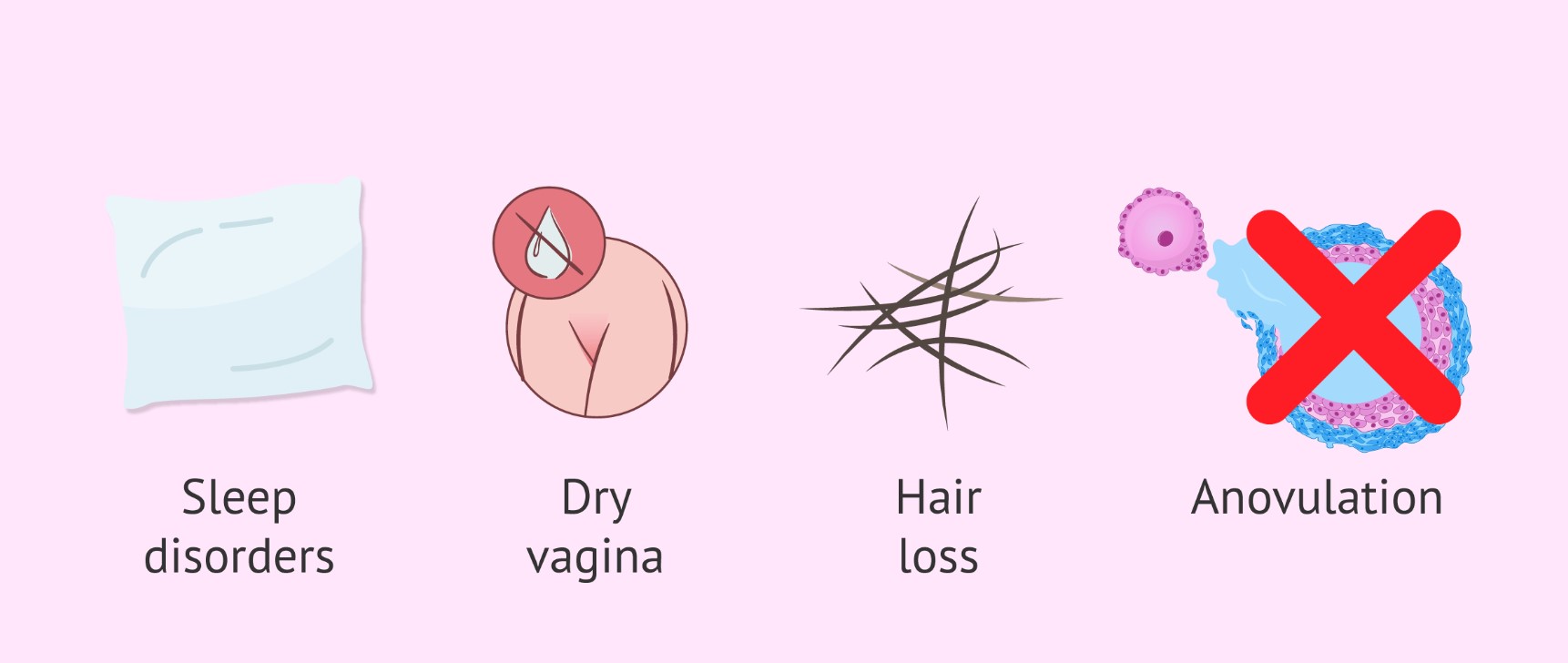
- visual impairment; narrowing of the visual field;
- headaches, sleep disturbances;
- dermatological problems - acne, dry skin;
- hair loss;
- other hair disorders - hirsutism, appearance of a mustache, beard, rhomboid groin hair;
- discharge from the nipples in the absence of pregnancy;
- pelvic pain.
The last symptom may be false primary amenorrhea: menstrual periods accumulate in the cavity of the reproductive organs and simply have no way to get out.
Diagnosis of amenorrhea
Usually, in the childbearing age, the first step is a blood test for pregnancy. If the test is negative, additional examinations are performed to clarify the diagnosis:
- gynecological examination
- blood levels of sex hormones;
- thyroid gland function;
- Pelvic ultrasound, including transvaginal ultrasound;
- CT and other X-ray examinations;
- hysteroscopy;
- chromosomal analysis for genetic abnormalities;
- consultations with related specialists: gastroenterologist, psychologist, endocrinologist, and others.
The diagnostic algorithm at LuxMedic Clinic is developed individually for each patient. It includes only those methods that are necessary to identify the cause of the pathology and eliminate it.
Treatment of amenorrhea
Depending on the diagnosis, the following are used
- sex hormone medications in case of their deficiency, which is of hereditary or acquired origin (due to tumors, ovarian surgery)
- normalization of the thyroid gland function, when it is the cause;
- correction of the psychological condition;
- Surgical interventions if there are no menstrual periods due to obstructions to blood flow.

The dosage of medications and the choice of treatment method for amenorrhea at Lux-Medic Clinic are selected individually. And they depend on the reason for the absence of menstruation.
Prevention of amenorrhea
The general recommendations for the prevention of amenorrhea are related to maintaining health:
- active lifestyle, starting from adolescence
- balanced nutrition;
- controlling body weight throughout life;
- giving up bad habits;
- balanced sexual life, use of barrier methods of contraception;
- annual check-ups by a qualified gynecologist from the first period;
- a balanced approach to the choice of oral contraceptives and intrauterine devices.
It will be useful to show a newborn girl to a pediatric gynecologist at Universum clinic: a doctor's consultation will help identify various prerequisites for the development of primary amenorrhea and treat them in a timely manner.
References
- Medically Reviewed by Traci C. Johnson, “Amenorrhea”, MD on September 06, 2022.
- Klein DA et al. “Amenorrhea: A Systematic Approach to Diagnosis and Management”. Am Fam Physician. 2019 Jul 1;100(1):39-48. PMID: 31259490.
- Bloomfield D. Secondary amenorrhea. Pediatr Rev. 2006 Mar;27(3):113-4. doi: 10.1542/pir.27-3-113. PMID: 16510552.
- American College of Obstetricians and Gynecologists (ACOG). Committee on Practice Bulletins – Gynecology. Diagnosis of abnormal uterine bleeding in reproductive-aged women // Obstetrics and Gynecology. – 2012. – Practice Bulletin № 128. – Р. 120 – 197.
F. A. Q.
- a girl hasn't had her first menstrual period by age 16;
- a woman of childbearing age up to 40 years hasn’t had her menstrual period for 6 months;
- pain in the lower abdomen can occur in the presence of cryptomenorrhea, due to inflammation, tumor development;
- delayed puberty in adolescent girls;
- masculinization in women of reproductive age (mustache, beard, baldness);
- discharge from the nipples;
- narrowing of visual fields in one or both eyes;
- concomitant symptoms do not always occur, they only indicate the probable cause of menstrual cessation or absence.
- anatomical, congenital or acquired abnormalities that result in impaired blood flow from the uterus;
- genetic abnormalities that can disrupt the hormonal function of the hypothalamus, pituitary gland, ovaries, and uterus;
- inflammation of the reproductive system;
- injuries and operations on the ovaries and uterus;
- ill-conceived hormonal contraception regimen;
- depletion of follicle reserves in the ovaries (age, surgery, PCOS);
- stressful situations, physical and psycho-emotional exhaustion;
- unhealthy lifestyle, bad habits lead to hormonal disruptions;
- physiological conditions when menstruation should not occur: early age of a girl, pregnancy, breastfeeding, menopause.
- Progression of the underlying disease, which is manifested by this symptom;
- infertility;
- primary - gross disorders of sexual and physical development;
- secondary - hormonal imbalance in the female body;
- irreversible changes in the reproductive organs may occur.
- It is impossible to get pregnant;
- atrophy of the uterus;
- if the blood flow pathways are blocked, irreversible changes in the genitals may occur;
- the disappearance of menstruation after menopause is dangerous for the development of osteoporosis, cardiovascular diseases, and early aging.


